
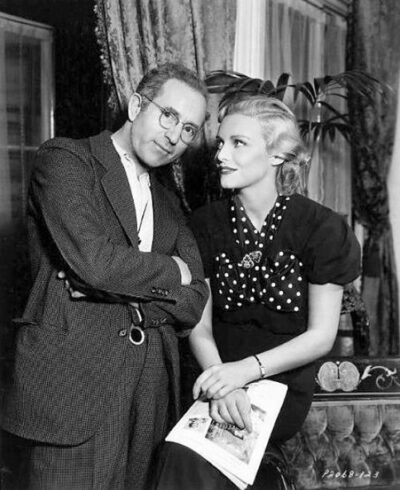
Victor Milner
Victor Milner was an American cinematographer. Born December 15, 1893, in New York City. Died October 29, 1972, in Los Angeles. Awards include Academy Award for Best Cinematography.
Facts
8 facts · 2 confirmed by two sources · 4 cited · 2 from one source
Where this comes from
Papalocal keeps its own record. It started from these sources; what each one said is kept here as it was copied, so a change on their side never changes this page by itself. Tap one to read its version.
What Wikidata says · copied November 18, 2026 · revision 2566951040
- Described as
- American cinematographer (1893-1972)
- Born
- December 15, 1893 · 4 references
- Died
- October 29, 1972 · 4 references
- Born in
- New York City · 1 reference
- Died in
- Los Angeles · 1 reference
- Buried in
- Forest Lawn Memorial Park
- Citizen of
- United States
- Occupation
- cinematographer · 1 reference
- Awards
- Academy Award for Best Cinematography (1935) · 1 reference
- Wikipedias with a page
- 16
Wikidata item Q718606 (wikidata.org/wiki/Q718606), public domain (CC0). Copied November 18, 2026.
What Wikipedia says · copied November 18, 2026 · revision 1367925266
Victor Milner, A.S.C. (December 15, 1893 – October 29, 1972) (sometimes Victor Miller) was an American cinematographer. He was nominated for ten cinematography Academy Awards, winning once for 1934 Cleopatra. Milner worked on more than 130 films, including dramas (Broken Lullaby), comedies (Unfaithfully Yours), film noir (Dark City), and Westerns (The Furies). He worked for large production companies like Metro-Goldwyn-Mayer, Universal, and Paramount during his film career.
- Born, in its opening lines
- December 15, 1893
- Died, in its opening lines
- October 29, 1972
From the Wikipedia article “Victor Milner” (en.wikipedia.org/wiki/Victor_Milner), by its contributors, under CC BY-SA 4.0 (creativecommons.org/licenses/by-sa/4.0/). Copied November 18, 2026; not changed.
Confirmed Two sources agree. Cited One source, and it names where it got it. One source One source, without a reference of its own. Sources disagree The sources disagree. We show the best-supported value and keep theirs below.
