
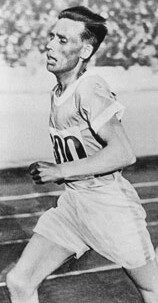
Ville Ritola
Ville Ritola was a Finnish long distance runner. Born January 18, 1896, in Peräseinäjoki. Died April 24, 1982, in Helsinki. Awards include Knight of the Order of the White Rose of Finland.
Facts
12 facts · 2 confirmed by two sources · 3 cited · 7 from one source
Where this comes from
Papalocal keeps its own record. It started from these sources; what each one said is kept here as it was copied, so a change on their side never changes this page by itself. Tap one to read its version.
What Wikidata says · copied November 16, 2026 · revision 2568486755
- Described as
- Finnish long distance runner
- Born
- January 18, 1896 · 4 references
- Died
- April 24, 1982 · 2 references
- Born in
- Peräseinäjoki · 1 reference
- Died in
- Helsinki · 2 references
- Citizen of
- Finland (1917–); Grand Duchy of Finland (–1917)
- Occupation
- long-distance runner; athletics competitor; middle-distance runner · 1 reference
- Sport
- athletics
- Awards
- Knight of the Order of the White Rose of Finland · 1 reference
- Height
- 1.75 m (5 ft 9 in)
- Wikipedias with a page
- 34
Wikidata item Q310447 (wikidata.org/wiki/Q310447), public domain (CC0). Copied November 16, 2026.
What Wikipedia says · copied November 16, 2026 · revision 1361010992
Vilho "Ville" Eino Ritola (18 January 1896 – 24 April 1982) was a Finnish long-distance runner. Known as one of the "Flying Finns", he won five Olympic gold medals and three Olympic silver medals in the 1920s. He holds the record of winning most athletics medals at a single Games – four golds and two silvers in Paris 1924 – and ranks second in terms of most athletics gold medals at a single Games.
- Born, in its opening lines
- January 18, 1896
- Died, in its opening lines
- April 24, 1982
From the Wikipedia article “Ville Ritola” (en.wikipedia.org/wiki/Ville_Ritola), by its contributors, under CC BY-SA 4.0 (creativecommons.org/licenses/by-sa/4.0/). Copied November 16, 2026; not changed.
Confirmed Two sources agree. Cited One source, and it names where it got it. One source One source, without a reference of its own. Sources disagree The sources disagree. We show the best-supported value and keep theirs below.
