
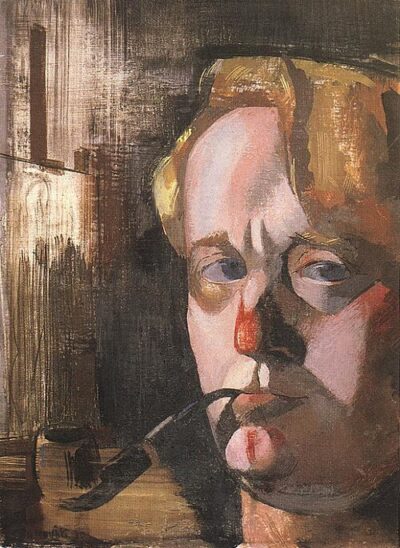
Vilmos Aba-Novák
Vilmos Aba-Novák was a Hungarian artist. Born March 15, 1894, in Budapest. Died September 29, 1941, in Budapest. Educated at Hungarian University of Fine Arts.
Facts
14 facts · 2 confirmed by two sources · 6 cited · 6 from one source
Where this comes from
Papalocal keeps its own record. It started from these sources; what each one said is kept here as it was copied, so a change on their side never changes this page by itself. Tap one to read its version.
What Wikidata says · copied November 17, 2026 · revision 2569196571
- Described as
- Hungarian artist (1894–1941)
- Other names
- Vilmos Aba Novák, Vilmos Aba-Novak, Vilmos Aba Novak
- Born
- March 15, 1894 · 7 references
- Died
- September 29, 1941 · 5 references
- Born in
- Budapest
- Died in
- Budapest
- Buried in
- Farkasréti Cemetery · 1 reference
- Citizen of
- Hungary
- Occupation
- painter · 1 reference; printmaker; artist · 1 reference
- Worked for
- Hungarian University of Fine Arts (1938–1941) · 1 reference
- Education
- Hungarian University of Fine Arts (1912–1914) · 1 reference
- Children
- Judit Aba-Novák
- Siblings
- Mária Novák · 1 reference; Gyula Novák · 1 reference
- Wikipedias with a page
- 25
Wikidata item Q18165 (wikidata.org/wiki/Q18165), public domain (CC0). Copied November 17, 2026.
What Wikipedia says · copied November 17, 2026 · revision 1380316188
Vilmos Aba-Novák (Hungarian: Aba-Novák Vilmos, until 1912: Hungarian: Novák Vilmos; March 15, 1894 – September 29, 1941) was a Hungarian painter and graphic artist. He was an original representative of modern art in his country, and specifically of its modern monumental painting. He was also the celebrated author of frescoes and church murals at Szeged and Budapest, and was officially patronized by the Hungarian nobility.
As a fresco painter, he completed numerous state and church commissions (for example: the frescoes of the Roman catholic church in Jászszentandrás, the Heroes' Gate in Szeged, the frescoes of the Szent István mausoleum in Székesfehérvár) in 1937 he won the World Exhibition in Paris, in 1940 the XXII. Grand Prize of the Venice Biennale. Seeing his pictures at the Paris exhibition, Pablo Picasso asked: "Who is this barbarian genius?"
The virtuoso style of his late paintings incorporated elements of expressionism and the formal language of the Italian Novecento. It is characterized by dynamic compositions painted with loud colors, inspired by monuments; his favorite subject was the world of the village fair and the circus. He used a brilliant technique to evoke the life of the people of the Great Plains - not without caricaturistic elements. His pictures are preserved in the Hungarian National Gallery and other public collections, as well as in many private collections.
- Born, in its opening lines
- March 15, 1894
- Died, in its opening lines
- September 29, 1941
From the Wikipedia article “Vilmos Aba-Novák” (en.wikipedia.org/wiki/Vilmos_Aba-Novák), by its contributors, under CC BY-SA 4.0 (creativecommons.org/licenses/by-sa/4.0/). Copied November 17, 2026; not changed.
Confirmed Two sources agree. Cited One source, and it names where it got it. One source One source, without a reference of its own. Sources disagree The sources disagree. We show the best-supported value and keep theirs below.
