
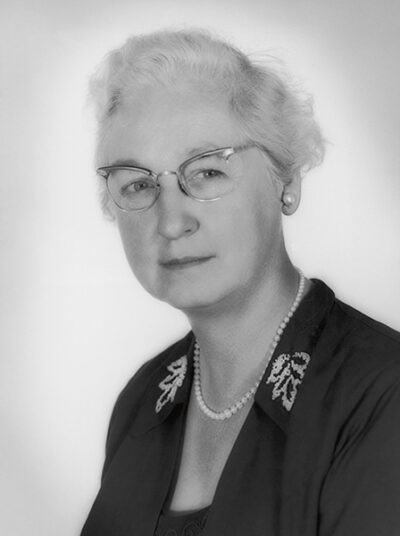
Virginia Apgar
Virginia Apgar was an American obstetrical anesthesiologist. Born June 7, 1909, in Westfield. Died August 7, 1974, in Columbia University Irving Medical Center. Educated at Columbia University Vagelos College of Physicians and Surgeons and Johns Hopkins Bloomberg School of Public Health. Awards include honorary doctorate, Elizabeth Blackwell Medal and National Women's Hall of Fame.
Facts
28 facts · 2 confirmed by two sources · 17 cited · 9 from one source
Where this comes from
Papalocal keeps its own record. It started from these sources; what each one said is kept here as it was copied, so a change on their side never changes this page by itself. Tap one to read its version.
What Wikidata says · copied November 13, 2026 · revision 2562062546
- Described as
- American obstetrical anesthesiologist (1909-1974)
- Born
- June 7, 1909 · 7 references
- Died
- August 7, 1974 · 5 references
- Born in
- Westfield
- Died in
- Columbia University Irving Medical Center
- Buried in
- Fairview Cemetery · 1 reference
- Cause of death
- cardiac arrest
- Citizen of
- United States
- Occupation
- pediatrician · 2 references; university teacher; anesthesiologist (1937–) · 1 reference
- Worked for
- Columbia University Vagelos College of Physicians and Surgeons (1938–1959) · 1 reference; Sloane Hospital for Women; March of Dimes (1959–1974) · 1 reference
- Education
- Columbia University Vagelos College of Physicians and Surgeons (–1933) · 1 reference; Johns Hopkins Bloomberg School of Public Health (1959–) · 1 reference; University of Wisconsin–Madison (1937–) · 1 reference; Andrés Bello University (–1925) · 1 reference; Mount Holyoke College (1925–1929) · 1 reference; Westfield High School · 1 reference
- Member of
- Graduate Women in Science
- Awards
- honorary doctorate (1965) · 1 reference; Elizabeth Blackwell Medal (1966) · 1 reference; National Women's Hall of Fame (1995) · 2 references; Ladies' Home Journal Women of the Year (1973) · 1 reference; New Jersey Hall of Fame (2019) · 1 reference
- Field
- teratology · 1 reference; anaesthesiology · 1 reference
- Father
- Charles E. Apgar
- Wikipedias with a page
- 54
Wikidata item Q463891 (wikidata.org/wiki/Q463891), public domain (CC0). Copied November 13, 2026.
What Wikipedia says · copied November 13, 2026 · revision 1381499824
Virginia Apgar (June 7, 1909 – August 7, 1974) was an American physician, obstetrical anesthesiologist and medical researcher, best known as the inventor of the Apgar score, a way to quickly assess the health of a newborn child immediately after birth in order to combat infant mortality. In 1952, she developed the 10-point Apgar score to assist physicians and nurses in assessing the status of newborns. Given at one minute and five minutes after birth, the Apgar test measures a child's breathing, skin color, reflexes, motion, and heart rate. A friend said, "She probably did more than any other physician to bring the problem of birth defects out of back rooms." She was a leader in the fields of anesthesiology and teratology, and introduced obstetrical considerations to the established field of neonatology.
- Born, in its opening lines
- June 7, 1909
- Died, in its opening lines
- August 7, 1974
From the Wikipedia article “Virginia Apgar” (en.wikipedia.org/wiki/Virginia_Apgar), by its contributors, under CC BY-SA 4.0 (creativecommons.org/licenses/by-sa/4.0/). Copied November 13, 2026; not changed.
Confirmed Two sources agree. Cited One source, and it names where it got it. One source One source, without a reference of its own. Sources disagree The sources disagree. We show the best-supported value and keep theirs below.
