
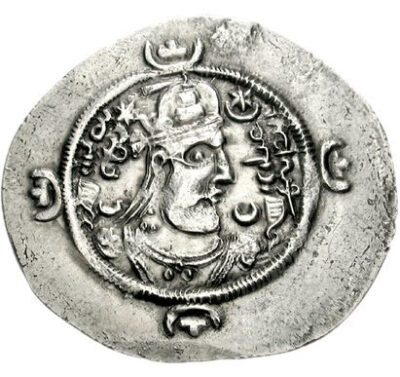
Vistahm
Vistahm was a Khosrow Parviz's uncle and Sassanid Empire claimant. Died 600, in Ctesiphon.
Facts
10 facts · 0 confirmed by two sources · 0 cited · 9 from one source · 1 where the sources disagree
What’s different
- Died: we show 600 (Sources disagree). Wikipedia says 628
Where this comes from
Papalocal keeps its own record. It started from these sources; what each one said is kept here as it was copied, so a change on their side never changes this page by itself. Tap one to read its version.
What Wikidata says · copied November 18, 2026 · revision 2501978298
- Described as
- Khosrow Parviz's uncle and Sassanid Empire claimant (592–597)
- Other names
- Wistahm, Bistam, Bastam, Bestam, Gustahm, Gostahm, Wistakhm, Vistakhm
- Died
- 600
- Died in
- Ctesiphon · 1 reference
- Citizen of
- Sasanian Empire
- Occupation
- military leader
- Spouse
- Gordiya
- Father
- Asparapete
- Siblings
- Vinduyih
- Religion
- Zoroastrianism
- Military rank
- spahbed; Hazarbed
- Wikipedias with a page
- 24
Wikidata item Q2351358 (wikidata.org/wiki/Q2351358), public domain (CC0). Copied November 18, 2026.
What Wikipedia says · copied November 18, 2026 · revision 1383355308
Vistahm or Bistam (also transliterated Wistaxm, Middle Persian: 𐭥𐭮𐭲𐭧𐭬 wsthm), was a Parthian dynast of the Ispahbudhan house, and maternal uncle of the Sasanian king of kings of Iran, Khosrow II (r. 590–628). Vistahm helped Khosrow regain his throne after the rebellion of another Parthian noble Bahram Chobin, of the House of Mihran, but later led a revolt himself, and ruled independently over a region which encompassed the entire Iranian East until he was defeated by Khosrow and his allies.
- Born, in its opening lines
- 590
- Died, in its opening lines
- 628
From the Wikipedia article “Vistahm” (en.wikipedia.org/wiki/Vistahm), by its contributors, under CC BY-SA 4.0 (creativecommons.org/licenses/by-sa/4.0/). Copied November 18, 2026; not changed.
Confirmed Two sources agree. Cited One source, and it names where it got it. One source One source, without a reference of its own. Sources disagree The sources disagree. We show the best-supported value and keep theirs below.
