
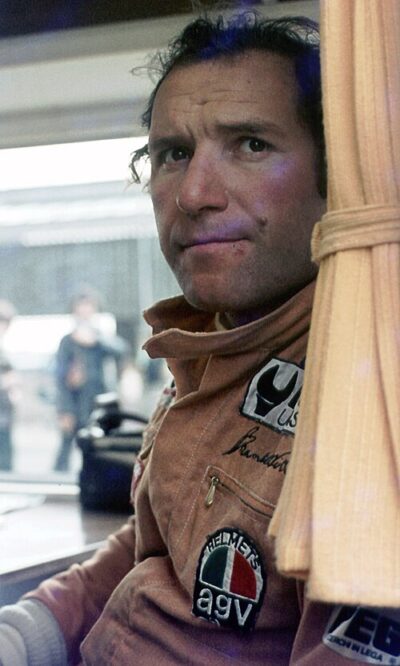
Vittorio Brambilla
Vittorio Brambilla was an Italian racing driver. Born November 11, 1937, in Monza. Died May 26, 2001, in Lesmo. Teams include Alfa Romeo Racing.
Facts
14 facts · 2 confirmed by two sources · 1 cited · 11 from one source
Where this comes from
Papalocal keeps its own record. It started from these sources; what each one said is kept here as it was copied, so a change on their side never changes this page by itself. Tap one to read its version.
What Wikidata says · copied November 17, 2026 · revision 2546058660
- Described as
- Italian racing driver (1937-2001)
- Other names
- Brambilla
- Born
- November 11, 1937
- Died
- May 26, 2001
- Born in
- Monza
- Died in
- Lesmo
- Buried in
- urban cemetery of Monza
- Cause of death
- myocardial infarction
- Citizen of
- Italy (1946–); Kingdom of Italy (–1946)
- Occupation
- motorcycle racer; racing automobile driver · 1 reference; Formula One driver
- Teams
- Alfa Romeo Racing
- Sport
- motorcycle sport
- Siblings
- Ernesto Brambilla
- Wikipedias with a page
- 25
Wikidata item Q171533 (wikidata.org/wiki/Q171533), public domain (CC0). Copied November 17, 2026.
What Wikipedia says · copied November 17, 2026 · revision 1385779839
Vittorio Brambilla (Italian pronunciation: [vitˈtɔːrjo bramˈbilla]; 11 November 1937 – 26 May 2001) was an Italian racing driver, who competed in Formula One from 1974 to 1980. Nicknamed "the Monza Gorilla", Brambilla won the 1975 Austrian Grand Prix with March.
Born and raised in Monza, Brambilla competed in Formula One for March, Surtees and Alfa Romeo. A wet weather specialist, Brambilla won the curtailed Austrian Grand Prix in 1975 with a 27-second margin over James Hunt in only 29 laps.
- Born, in its opening lines
- November 11, 1937
- Died, in its opening lines
- May 26, 2001
From the Wikipedia article “Vittorio Brambilla” (en.wikipedia.org/wiki/Vittorio_Brambilla), by its contributors, under CC BY-SA 4.0 (creativecommons.org/licenses/by-sa/4.0/). Copied November 17, 2026; not changed.
Confirmed Two sources agree. Cited One source, and it names where it got it. One source One source, without a reference of its own. Sources disagree The sources disagree. We show the best-supported value and keep theirs below.
