
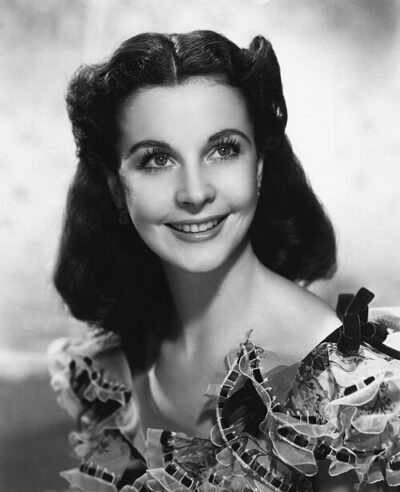
Vivien Leigh
Vivien Leigh was a British actress. Born November 5, 1913, in Darjeeling. Died July 8, 1967, in Eaton Square. Educated at Royal Academy of Dramatic Art and Woldingham School. Awards include Academy Award for Best Actress (2 times), Tony Award for Best Actress in a Musical and star on Hollywood Walk of Fame.
Facts
22 facts · 2 confirmed by two sources · 11 cited · 9 from one source
Where this comes from
Papalocal keeps its own record. It started from these sources; what each one said is kept here as it was copied, so a change on their side never changes this page by itself. Tap one to read its version.
What Wikidata says · copied November 16, 2026 · revision 2568784918
- Described as
- British actress (1913–1967)
- Other names
- Leigh, Lady Olivier, Vivien Leigh, Lady Olivier, Vivian Mary Hartley
- Born
- November 5, 1913 · 9 references
- Died
- July 8, 1967 · 12 references
- Born in
- Darjeeling · 1 reference
- Died in
- Eaton Square · 1 reference
- Buried in
- East Sussex
- Cause of death
- tuberculosis
- Name at birth
- Vivian Mary Hartley
- Citizen of
- United Kingdom
- Occupation
- film actor · 1 reference; stage actor; actor · 1 reference
- Education
- Royal Academy of Dramatic Art (–1934) · 1 reference; Woldingham School · 1 reference; Loreto Convent
- Awards
- Academy Award for Best Actress (2 times) (1940, 1952) · 1 reference; Tony Award for Best Actress in a Musical (1963); star on Hollywood Walk of Fame · 1 reference; Volpi Cup for Best Actress
- Spouse
- Laurence Olivier (1940–1960) · 2 references; Herbert Leigh Holman (1932–1940) · 2 references
- Children
- Suzanne Farrington · 1 reference
- Father
- Ernest Richard Hartley · 1 reference
- Wikipedias with a page
- 109
Wikidata item Q129429 (wikidata.org/wiki/Q129429), public domain (CC0). Copied November 16, 2026.
What Wikipedia says · copied November 16, 2026 · revision 1385638108
Vivian Mary Olivier (née Hartley; 5 November 1913 – 8 July 1967), known professionally as Vivien Leigh ( LEE) and styled as Lady Olivier after 1947, was a British actress. After completing her drama school education, Leigh performed on stage before receiving small roles in four films in 1935, eventually progressing to the role of heroine in Fire Over England (1937). She went on to win the Academy Award for Best Actress twice, for her performances as Scarlett O'Hara in Gone with the Wind (1939) and Blanche DuBois in the film adaptation of A Streetcar Named Desire (1951), a role she had played on stage in London's West End in 1949. For the latter role, she also won the Volpi Cup for Best Actress, and later won a Tony Award for her work in the Broadway musical version of Tovarich (1963).
Despite her fame as a screen actress, Leigh was primarily a stage performer. During her 30-year career, she played roles ranging from the heroines of Noël Coward and George Bernard Shaw comedies to classic Shakespearean characters such as Ophelia, Cleopatra, Juliet and Lady Macbeth. Later in life, she performed as a character actress in a few films. Although her career had periods of inactivity, in 1999 the American Film Institute (AFI) ranked Leigh as the 16th-greatest female movie star of classic Hollywood cinema. Widely lauded for her beauty, Leigh felt that her physical attributes sometimes prevented her from being taken seriously as an actress.
At the time, the public strongly identified Leigh with her second husband, Laurence Olivier, who was her spouse from 1940 to 1960. Leigh and Olivier starred together in many stage productions, with Olivier often directing, and in three films. She earned a reputation for being difficult to work with, and for much of her life she had recurrent bouts of chronic tuberculosis, which was first diagnosed in the mid-1940s and ultimately led to her death at age 53.
- Born, in its opening lines
- November 5, 1913
- Died, in its opening lines
- July 8, 1967
From the Wikipedia article “Vivien Leigh” (en.wikipedia.org/wiki/Vivien_Leigh), by its contributors, under CC BY-SA 4.0 (creativecommons.org/licenses/by-sa/4.0/). Copied November 16, 2026; not changed.
Confirmed Two sources agree. Cited One source, and it names where it got it. One source One source, without a reference of its own. Sources disagree The sources disagree. We show the best-supported value and keep theirs below.
