
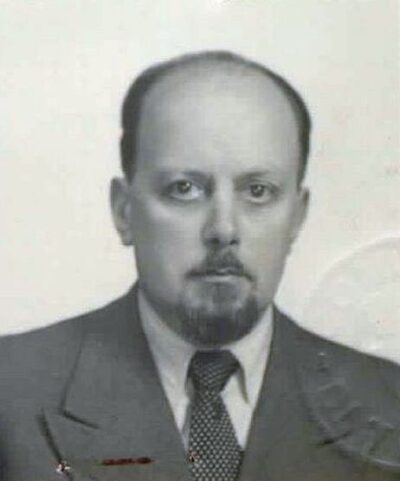
Vladimir Bartol
Vladimir Bartol was a Slovenian writer. Born February 24, 1903, in Imperial Free City of Trieste. Died September 12, 1967, in Ljubljana. Educated at Faculty of Arts of Paris and University of Ljubljana.
Facts
18 facts · 2 confirmed by two sources · 3 cited · 13 from one source
Where this comes from
Papalocal keeps its own record. It started from these sources; what each one said is kept here as it was copied, so a change on their side never changes this page by itself. Tap one to read its version.
What Wikidata says · copied November 16, 2026 · revision 2541331055
- Described as
- Slovenian writer (1903-1967)
- Other names
- Vladimir Bartold
- Born
- February 24, 1903 · 3 references
- Died
- September 12, 1967 · 3 references
- Born in
- Imperial Free City of Trieste
- Died in
- Ljubljana · 1 reference
- Buried in
- Žale Central Cemetery
- Citizen of
- Federal People's Republic of Yugoslavia; Free Territory of Trieste; Kingdom of Italy; Cisleithania
- Occupation
- writer · 1 reference; novelist; playwright; essayist; entomologist · 1 reference
- Education
- Faculty of Arts of Paris; University of Ljubljana · 1 reference
- Member of
- Slovenian Academy of Sciences and Arts
- Mother
- Marica Nadlišek Bartol · 1 reference
- Wikipedias with a page
- 37
Wikidata item Q351683 (wikidata.org/wiki/Q351683), public domain (CC0). Copied November 16, 2026.
What Wikipedia says · copied November 16, 2026 · revision 1377796080
Vladimir Bartol (24 February 1903 – 12 September 1967) was a writer from the Slovene minority in Italy. He is best known for his 1938 novel Alamut, the most popular work of Slovene literature around the world, which has been translated into numerous languages.
- Born, in its opening lines
- February 24, 1903
- Died, in its opening lines
- September 12, 1967
From the Wikipedia article “Vladimir Bartol” (en.wikipedia.org/wiki/Vladimir_Bartol), by its contributors, under CC BY-SA 4.0 (creativecommons.org/licenses/by-sa/4.0/). Copied November 16, 2026; not changed.
Confirmed Two sources agree. Cited One source, and it names where it got it. One source One source, without a reference of its own. Sources disagree The sources disagree. We show the best-supported value and keep theirs below.
