
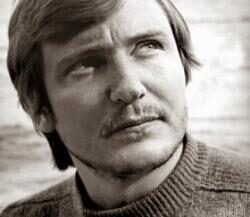
Volodymyr Ivasyuk
Volodymyr Ivasyuk is an Ukrainian composer and poet. Born March 4, 1949, in Kitsman. Educated at Lviv Conservatory and Danylo Halytsky Lviv National Medical University. Awards include Shevchenko National Prize and Hero of Ukraine, Order of the State.
Facts
17 facts · 1 confirmed by two sources · 3 cited · 13 from one source
Where this comes from
Papalocal keeps its own record. It started from these sources; what each one said is kept here as it was copied, so a change on their side never changes this page by itself. Tap one to read its version.
What Wikidata says · copied November 17, 2026 · revision 2565411551
- Described as
- Ukrainian composer and poet (1949-1979)
- Other names
- Volodymyr Mykhailovych Ivasyuk
- Born
- March 4, 1949
- Born in
- Kitsman
- Buried in
- Lychakiv Cemetery · 1 reference
- Cause of death
- hanging to death
- Citizen of
- Soviet Union
- Occupation
- lyricist; composer · 1 reference; songwriter; singer · 1 reference
- Education
- Lviv Conservatory; Danylo Halytsky Lviv National Medical University
- Member of
- Chervona Ruta
- Genre
- ballad
- Awards
- Shevchenko National Prize; Hero of Ukraine, Order of the State
- Father
- Mikhail Ivasyuk · 1 reference
- Website
- http://ivasyuk.org.ua
- Wikipedias with a page
- 24
Wikidata item Q786521 (wikidata.org/wiki/Q786521), public domain (CC0). Copied November 17, 2026.
What Wikipedia says · copied November 17, 2026 · revision 1370464161
Volodymyr Mykhailovych Ivasiuk (Ukrainian: Володимир Михайлович Івасюк, 4 March 1949 – 24–27 April 1979) was a Ukrainian songwriter, composer and poet. He is the author and composer of the widely popular song "Chervona Ruta" popularized by Sofia Rotaru in 1971, and later covered by other singers.
- Born, in its opening lines
- March 4, 1949
- Died, in its opening lines
- April 27, 1979
From the Wikipedia article “Volodymyr Ivasiuk” (en.wikipedia.org/wiki/Volodymyr_Ivasiuk), by its contributors, under CC BY-SA 4.0 (creativecommons.org/licenses/by-sa/4.0/). Copied November 17, 2026; not changed.
Confirmed Two sources agree. Cited One source, and it names where it got it. One source One source, without a reference of its own. Sources disagree The sources disagree. We show the best-supported value and keep theirs below.
