
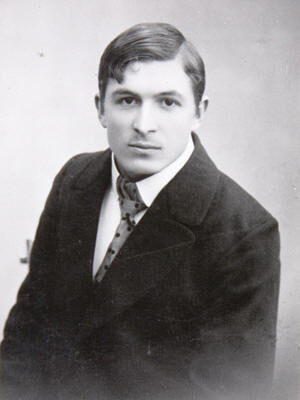
Wäinö Aaltonen
Wäinö Aaltonen was a Finnish artist and sculptor. Born March 8, 1894, in Karinainen. Died May 30, 1966, in Helsinki. Known for Lily and Kun ystävyyssuhteet solmitaan. Educated at Turun piirustuskoulu and Wäinö Aaltonen School. Awards include Prince Eugen Medal, doctor honoris causa of the University of Helsinki and honorary doctorate of Lund University.
Facts
32 facts · 2 confirmed by two sources · 13 cited · 16 from one source · 1 where the sources disagree
What’s different
- Born in: we show Karinainen (Sources disagree). Wikidata also lists Marttila
Where this comes from
Papalocal keeps its own record. It started from these sources; what each one said is kept here as it was copied, so a change on their side never changes this page by itself. Tap one to read its version.
What Wikidata says · copied November 16, 2026 · revision 2567452852
- Described as
- Finnish artist and sculptor (1894–1966)
- Other names
- Wäinö Waldemar Aaltonen, Väinö Aaltonen, Vallio Aaltonen, Viainë Aaltonen, Waino Voeldemar Aaltonen, W. W. Aaltonen, W. Aaltonen, Wäinö W. Aaltonen
- Born
- March 8, 1894 · 10 references
- Died
- May 30, 1966 · 9 references
- Born in
- Karinainen · 2 references; Marttila · 2 references
- Died in
- Helsinki · 3 references
- Name at birth
- Wäinö Waldemar Aaltonen
- Citizen of
- Finland (1917–) · 1 reference; Grand Duchy of Finland (–1917)
- Occupation
- painter · 1 reference; sculptor · 1 reference; photographer · 1 reference; visual artist · 13 references
- Education
- Turun piirustuskoulu; Wäinö Aaltonen School
- Member of
- Research Council of Finland (1948–); Accademia delle Arti del Disegno
- Genre
- portrait · 1 reference; modernism · 1 reference
- Known for
- Lily; Kun ystävyyssuhteet solmitaan
- Awards
- Prince Eugen Medal (1947) · 1 reference; doctor honoris causa of the University of Helsinki (1950); honorary doctorate of Lund University (1941); Commander of the Order of the White Rose of Finland (1950) · 1 reference; Commander of the Order of St. Olav (1950) · 1 reference; Grand Officer of the Order of the Star of Italian Solidarity (1952) · 1 reference; Commander First Class of the Order of the White Rose of Finland (1959) · 1 reference; Knight of the Legion of Honour · 1 reference
- Field
- art; art of sculpture · 1 reference
- Spouse
- Aino Pietiläinen (1920–1929)
- Children
- Matti Aaltonen; Maija Aaltonen
- Wikipedias with a page
- 47
Wikidata item Q213619 (wikidata.org/wiki/Q213619), public domain (CC0). Copied November 16, 2026.
What Wikipedia says · copied November 16, 2026 · revision 1380749543
Wäinö Valdemar Aaltonen (8 March 1894 – 30 May 1966) was a Finnish artist and sculptor. The Chambers Biographical Dictionary describes him as "one of the leading Finnish sculptors".
He was born to a tailor in the village of Karinainen, Finland. He attended the School of Drawing of the Turku Art Association from age 16, or specifically between 1910 and 1915. He had spent many of the early years at this school studying painting under Victor Westerholm, but he was mainly self-taught as a sculptor. He learned the technics of treatment of marble with his relative Aarre Aaltonen, and by working as a trainee stonemason in Hirvensalo. Sculptor Felix Nylund was a substitute teacher in the art school in Turku for one season, and his work was inspiration for young Aaltonen.
A journey Aaltonen made to Italy in 1923 opened his eyes to cubist and futurist art. These elements can primarily be seen in his paintings.
As the Republic of Finland arose, and the First World War raged, he sculpted War Memorials. He soon became a nationalist icon, the exemplar Finn, establishing an exhibition in Stockholm in 1927. His sculpture is nationalist in nature, and he is noted for monumental figures and busts portraying citizens of Finland. An example is the 1925 sculpture of Paavo Nurmi, a cast of which is exhibited outside the Helsinki stadium. A fourth cast of the statue was donated by the Republic of Finland to the park of the Olympic Museum of the International Olympic Committee in Lausanne, Switzerland. Another notable work is that of Jean Sibelius, a bust of 1928. These two works, like the main body of his work, are bronze casts—though he did work in stone and even glass. Though chiefly naturalistic, the cubist influence is also present here. He was one of the early 20th-century pioneers of direct carving.
When the new House of Parliament for Finland was built, architect Johan Sigfrid Sirén wished he could buy sculptures directly from Aaltonen. Instead, an open competition was announced, and Aaltonen's Work and the Future was selected as the winner. The series of gilded sculptures that Aaltonen completed in 1932 were cast in bronze after his death.
Aaltonen was married four times. His first wife was singer Aino Alisa Pietikäinen from 1920, second wife actor Elsa Emilia Rantalainen from 1931, third wife gallerist in Galerie Artek Elvi Elisabet Hernell from 1942 and fourth wife medical doctor Marie Elisabeth Maasik from year 1961. His son Matti Aaltonen became an architect, who with Irma Aaltonen designed the Wäinö Aaltonen Museum of Art in Turku.
- Born, in its opening lines
- March 8, 1894
- Died, in its opening lines
- May 30, 1966
From the Wikipedia article “Wäinö Aaltonen” (en.wikipedia.org/wiki/Wäinö_Aaltonen), by its contributors, under CC BY-SA 4.0 (creativecommons.org/licenses/by-sa/4.0/). Copied November 16, 2026; not changed.
Confirmed Two sources agree. Cited One source, and it names where it got it. One source One source, without a reference of its own. Sources disagree The sources disagree. We show the best-supported value and keep theirs below.
