
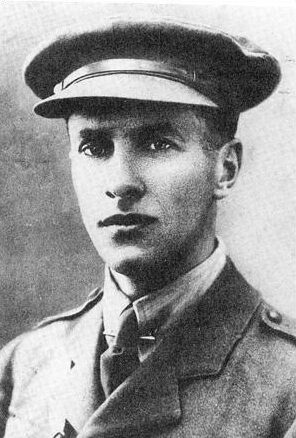
Walter Duranty
Walter Duranty was an American journalist. Born May 25, 1884, in Liverpool. Died October 3, 1957, in Orlando. Educated at Emmanuel College. Awards include Pulitzer Prize for Correspondence and O. Henry Award.
Facts
13 facts · 2 confirmed by two sources · 5 cited · 6 from one source
Where this comes from
Papalocal keeps its own record. It started from these sources; what each one said is kept here as it was copied, so a change on their side never changes this page by itself. Tap one to read its version.
What Wikidata says · copied November 18, 2026 · revision 2567317991
- Described as
- American journalist (1884–1957)
- Born
- May 25, 1884 · 3 references
- Died
- October 3, 1957 · 2 references
- Born in
- Liverpool · 1 reference
- Died in
- Orlando · 1 reference
- Citizen of
- United Kingdom; United Kingdom of Great Britain and Ireland (–1927); United States
- Occupation
- journalist · 1 reference
- Worked for
- The New York Times
- Education
- Emmanuel College
- Awards
- Pulitzer Prize for Correspondence (1932) · 1 reference; O. Henry Award (1928)
- Field
- journalism · 1 reference
- Wikipedias with a page
- 16
Wikidata item Q1286904 (wikidata.org/wiki/Q1286904), public domain (CC0). Copied November 18, 2026.
What Wikipedia says · copied November 18, 2026 · revision 1384432699
Walter Duranty (25 May 1884 – 3 October 1957) was an Anglo-American journalist who served as Moscow bureau chief of The New York Times for fourteen years (1922–1936) following the Bolshevik victory in the Russian Civil War (1917–1923).
Though Duranty was widely regarded in his day, and received the 1932 Pulitzer Prize for his "profound and intimate comprehension of conditions in Russia," he was later criticized for repeating Soviet propaganda and downplaying the horrors of Stalinism. In particular, beginning in 1990 there were calls for the Pulitzer Board to revoke Duranty's prize for his coverage of the Soviet famine of 1930–1933. The board declined to revoke the award and in 2003 said the articles which it examined in making the award did not contain "clear and convincing evidence of deliberate deception".
- Born, in its opening lines
- May 25, 1884
- Died, in its opening lines
- October 3, 1957
From the Wikipedia article “Walter Duranty” (en.wikipedia.org/wiki/Walter_Duranty), by its contributors, under CC BY-SA 4.0 (creativecommons.org/licenses/by-sa/4.0/). Copied November 18, 2026; not changed.
Confirmed Two sources agree. Cited One source, and it names where it got it. One source One source, without a reference of its own. Sources disagree The sources disagree. We show the best-supported value and keep theirs below.
