
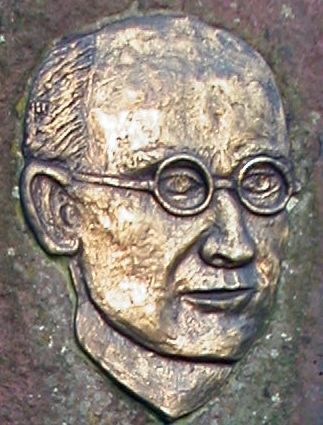
Walter Hohmann
Walter Hohmann was a German engineer. Born March 18, 1880, in Hardheim. Died March 11, 1945, in Essen. Educated at RWTH Aachen University and Technical University of Munich. Awards include International Space Hall of Fame.
Facts
14 facts · 2 confirmed by two sources · 2 cited · 10 from one source
Where this comes from
Papalocal keeps its own record. It started from these sources; what each one said is kept here as it was copied, so a change on their side never changes this page by itself. Tap one to read its version.
What Wikidata says · copied November 17, 2026 · revision 2569128552
- Described as
- German engineer (1880-1945)
- Other names
- Walther Hohmann
- Born
- March 18, 1880 · 2 references
- Died
- March 11, 1945 · 2 references
- Born in
- Hardheim
- Died in
- Essen
- Buried in
- Essen
- Citizen of
- Germany
- Occupation
- military flight engineer; civil engineer; architect; astronomer · 1 reference; engineer · 1 reference
- Education
- RWTH Aachen University; Technical University of Munich · 1 reference
- Awards
- International Space Hall of Fame (1976) · 2 references
- Wikipedias with a page
- 24
Wikidata item Q63941 (wikidata.org/wiki/Q63941), public domain (CC0). Copied November 17, 2026.
What Wikipedia says · copied November 17, 2026 · revision 1351418250
Walter Hohmann (; German: [ˈhoːman]; 18 March 1880 – 11 March 1945) was a German engineer who made an important contribution to the understanding of orbital dynamics. In a book published in 1925, Hohmann demonstrated a fuel-efficient path to move a spacecraft between two different orbits, now called a Hohmann transfer orbit. He received his Ph.D. from the RWTH Aachen University in 1920.
- Born, in its opening lines
- March 18, 1880
- Died, in its opening lines
- March 11, 1945
From the Wikipedia article “Walter Hohmann” (en.wikipedia.org/wiki/Walter_Hohmann), by its contributors, under CC BY-SA 4.0 (creativecommons.org/licenses/by-sa/4.0/). Copied November 17, 2026; not changed.
Confirmed Two sources agree. Cited One source, and it names where it got it. One source One source, without a reference of its own. Sources disagree The sources disagree. We show the best-supported value and keep theirs below.
