
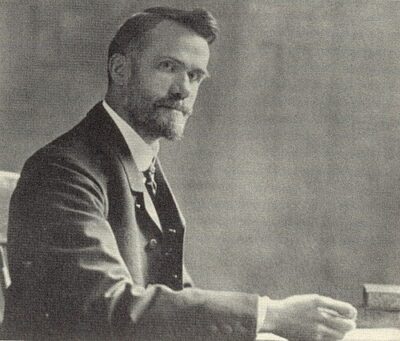
Walter Rauschenbusch
Walter Rauschenbusch was an United States Baptist theologian. Born October 4, 1861, in Rochester. Died July 25, 1918, in Rochester. Educated at Colgate Rochester Crozer Divinity School.
Facts
15 facts · 2 confirmed by two sources · 4 cited · 9 from one source
Where this comes from
Papalocal keeps its own record. It started from these sources; what each one said is kept here as it was copied, so a change on their side never changes this page by itself. Tap one to read its version.
What Wikidata says · copied November 16, 2026 · revision 2567381776
- Described as
- United States Baptist theologian (1861–1918)
- Born
- October 4, 1861 · 5 references
- Died
- July 25, 1918 · 4 references
- Born in
- Rochester · 1 reference
- Died in
- Rochester · 1 reference
- Citizen of
- United States
- Occupation
- theologian · 1 reference; university teacher; missionary · 1 reference
- Education
- Colgate Rochester Crozer Divinity School
- Children
- Winifred Rauschenbusch
- Father
- Augustus Rauschenbusch
- Mother
- Karoline Rump
- Siblings
- Frida Fetzer; Emma Rauschenbusch Clough
- Religion
- Baptists
- Wikipedias with a page
- 23
Wikidata item Q1345238 (wikidata.org/wiki/Q1345238), public domain (CC0). Copied November 16, 2026.
What Wikipedia says · copied November 16, 2026 · revision 1384187229
Walter Rauschenbusch (1861–1918) was an American theologian and Baptist pastor who taught at the Rochester Theological Seminary. Rauschenbusch was a key figure in the Social Gospel and single tax movements that flourished in the United States during the late 19th and early 20th centuries. He was also the maternal grandfather of the influential philosopher Richard Rorty and the great-grandfather of Paul Raushenbush.
- Born, in its opening lines
- 1861
- Died, in its opening lines
- 1918
From the Wikipedia article “Walter Rauschenbusch” (en.wikipedia.org/wiki/Walter_Rauschenbusch), by its contributors, under CC BY-SA 4.0 (creativecommons.org/licenses/by-sa/4.0/). Copied November 16, 2026; not changed.
Confirmed Two sources agree. Cited One source, and it names where it got it. One source One source, without a reference of its own. Sources disagree The sources disagree. We show the best-supported value and keep theirs below.
