
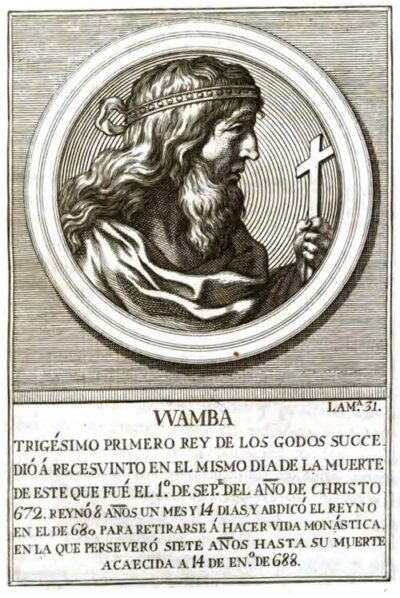
Wamba
Wamba was a Visigothic king. Born 633, in Penamacor. Died 688, in Pampliega. Positions held include king of Wisigoths (672–680).
Facts
14 facts · 0 confirmed by two sources · 1 cited · 11 from one source · 2 where the sources disagree
What’s different
- Born: we show 633 (Sources disagree). Wikipedia says 630
- Died: we show 688 (Sources disagree). Wikipedia says 687
Where this comes from
Papalocal keeps its own record. It started from these sources; what each one said is kept here as it was copied, so a change on their side never changes this page by itself. Tap one to read its version.
What Wikidata says · copied November 16, 2026 · revision 2521349490
- Described as
- Visigothic king
- Other names
- Vamba, Flavius Wamba Rex, Wamba of the Visigoths
- Born
- 633
- Died
- 688
- Born in
- Penamacor · 1 reference
- Died in
- Pampliega · 1 reference
- Buried in
- Pampliega (688–1274); Toledo (1274–)
- Citizen of
- Kingdom of Toledo
- Occupation
- sovereign; warrior; Christian monk (680–)
- Positions held
- king of Wisigoths (672–680)
- Father
- Tulga
- Religion
- Nicene Christianity
- Lived in
- Toledo
- Wikipedias with a page
- 35
Wikidata item Q312600 (wikidata.org/wiki/Q312600), public domain (CC0). Copied November 16, 2026.
What Wikipedia says · copied November 16, 2026 · revision 1367904072
Wamba (Medieval Latin: Vamba, Wamba; c. 630 – 687/688) was the king of the Visigoths from 672 to 680. During his reign, the Visigothic kingdom encompassed all of Hispania and part of southern Gaul known as Septimania.
According to Herwig Wolfram, Wamba means "big paunch" in Gothic (like German: "Wampe", cognate to English "womb") and may have been a nickname. Both Julian of Toledo in his Historia Wambae (History of Wamba) and the decisions of the eleventh Council of Toledo, held under Wamba's auspices, refer to the king only as Wamba.
- Born, in its opening lines
- 630
- Died, in its opening lines
- 687
From the Wikipedia article “Wamba (king)” (en.wikipedia.org/wiki/Wamba_(king)), by its contributors, under CC BY-SA 4.0 (creativecommons.org/licenses/by-sa/4.0/). Copied November 16, 2026; not changed.
Confirmed Two sources agree. Cited One source, and it names where it got it. One source One source, without a reference of its own. Sources disagree The sources disagree. We show the best-supported value and keep theirs below.
