
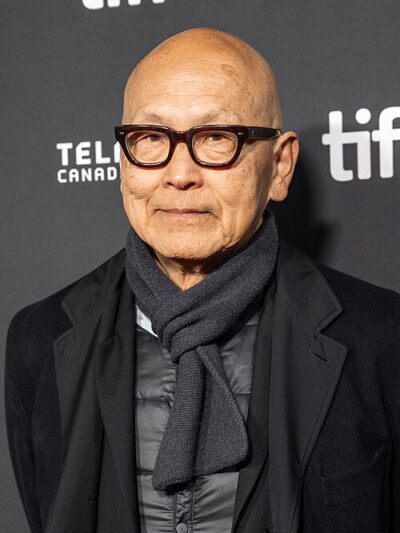
Wayne Wang
Wayne Wang is an American film director. Born January 12, 1949, in British Hong Kong. Educated at California College of the Arts and Foothill College.
Facts
12 facts · 1 confirmed by two sources · 3 cited · 8 from one source
Where this comes from
Papalocal keeps its own record. It started from these sources; what each one said is kept here as it was copied, so a change on their side never changes this page by itself. Tap one to read its version.
What Wikidata says · copied November 15, 2026 · revision 2568221979
- Described as
- American film director
- Born
- January 12, 1949 · 5 references
- Born in
- British Hong Kong · 1 reference
- Citizen of
- Hong Kong; United States
- Occupation
- film director · 1 reference; film editor; film producer; screenwriter; writer; director · 1 reference
- Education
- California College of the Arts; Foothill College
- Wikipedias with a page
- 24
Wikidata item Q728360 (wikidata.org/wiki/Q728360), public domain (CC0). Copied November 15, 2026.
What Wikipedia says · copied November 15, 2026 · revision 1381548353
Wayne Wang (traditional Chinese: 王穎; simplified Chinese: 王颖; pinyin: Wáng Yǐng; Jyutping: Wong4 Wing6; born January 12, 1949) is a Hong Kong-American film director, producer, and screenwriter. Considered a pioneer of Asian-American cinema, he was one of the first Chinese-American filmmakers to gain a major foothold in Hollywood. His films, often independently produced, deal with issues of contemporary Asian-American culture and domestic life.
His best known works include Dim Sum: A Little Bit of Heart (1985), Eat a Bowl of Tea (1989), the Amy Tan literary adaptation The Joy Luck Club (1993), Chinese Box (1997), and A Thousand Years of Good Prayers (2007). Other films include the Harvey Keitel and William Hurt–starring comedy Smoke (1995), the family film Because of Winn-Dixie (2005), the romantic comedies Maid in Manhattan (2002) and Last Holiday (2006), and the controversial erotic drama The Center of the World (2001).
He is the recipient of numerous accolades, including a Bodil Award, a Silver Bear, two Golden Shells, with BAFTA Award, Sundance Grand Jury, Golden Lion, and César Award nominations.
- Born, in its opening lines
- January 12, 1949
From the Wikipedia article “Wayne Wang” (en.wikipedia.org/wiki/Wayne_Wang), by its contributors, under CC BY-SA 4.0 (creativecommons.org/licenses/by-sa/4.0/). Copied November 15, 2026; not changed.
Confirmed Two sources agree. Cited One source, and it names where it got it. One source One source, without a reference of its own. Sources disagree The sources disagree. We show the best-supported value and keep theirs below.
