
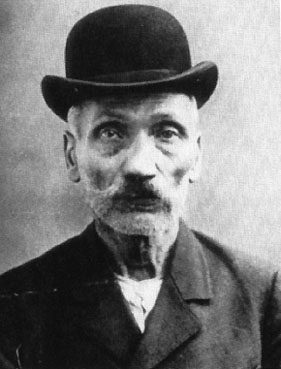
Wilhelm Voigt
Wilhelm Voigt was a German impostor. Born February 13, 1849, in Sovetsk. Died January 3, 1922, in Luxembourg.
Facts
11 facts · 2 confirmed by two sources · 4 cited · 5 from one source
Where this comes from
Papalocal keeps its own record. It started from these sources; what each one said is kept here as it was copied, so a change on their side never changes this page by itself. Tap one to read its version.
What Wikidata says · copied November 16, 2026 · revision 2569023854
- Described as
- German impostor (1849-1922)
- Other names
- The Captain of Köpenick, Friedrich Wilhelm Voigt
- Born
- February 13, 1849 · 2 references
- Died
- January 3, 1922 · 1 reference
- Born in
- Sovetsk · 1 reference
- Died in
- Luxembourg · 1 reference
- Buried in
- Cimetière Notre-Dame
- Citizen of
- Luxembourg; Kingdom of Prussia; German Reich
- Occupation
- impostor · 1 reference; cabaret performer · 1 reference; cobbler · 1 reference
- Wikipedias with a page
- 30
Wikidata item Q62071 (wikidata.org/wiki/Q62071), public domain (CC0). Copied November 16, 2026.
What Wikipedia says · copied November 16, 2026 · revision 1381152780
Friedrich Wilhelm Voigt (German pronunciation: [ˈfʁiːdʁɪç ˈvɪlhɛlm ˈfoːkt]; 13 February 1849 – 3 January 1922) was a German con man and impostor. In his most famous exploit, Voigt masqueraded as a military officer of the elite Prussian Guards in 1906, rounding up several Imperial German Army soldiers under his command, arresting the Mayor of Köpenick, and confiscating 4,002 marks from the city treasury. Voigt then changed back into civilian clothing and disappeared with the money. The case was exploited for British propaganda about German militarism, but the German people overwhelmingly considered Voigt's exploit to be both clever and hilarious. Although Voigt was soon caught and served 20 months in prison, he became a folk hero as "the Captain of Köpenick" (German: der Hauptmann von Köpenick [ˈhaʊptman fɔn ˈkøːpənɪk] ) and was granted a full pardon by Kaiser Wilhelm II.
- Born, in its opening lines
- February 13, 1849
- Died, in its opening lines
- January 3, 1922
From the Wikipedia article “Wilhelm Voigt” (en.wikipedia.org/wiki/Wilhelm_Voigt), by its contributors, under CC BY-SA 4.0 (creativecommons.org/licenses/by-sa/4.0/). Copied November 16, 2026; not changed.
Confirmed Two sources agree. Cited One source, and it names where it got it. One source One source, without a reference of its own. Sources disagree The sources disagree. We show the best-supported value and keep theirs below.
