
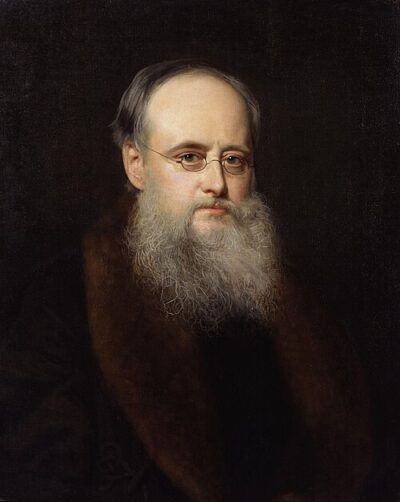
Wilkie Collins
Wilkie Collins was a British writer. Born January 8, 1824, in London. Died September 23, 1889, in London. Known for The Woman in White and The Moonstone.
Facts
25 facts · 2 confirmed by two sources · 12 cited · 11 from one source
Where this comes from
Papalocal keeps its own record. It started from these sources; what each one said is kept here as it was copied, so a change on their side never changes this page by itself. Tap one to read its version.
What Wikidata says · copied November 16, 2026 · revision 2565596843
- Described as
- British writer (1824–1889)
- Other names
- William Wilkie Collins, William Collins
- Born
- January 8, 1824 · 16 references
- Died
- September 23, 1889 · 16 references
- Born in
- London · 2 references
- Died in
- London · 2 references
- Buried in
- Kensal Green Cemetery · 1 reference
- Cause of death
- stroke
- Citizen of
- United Kingdom of Great Britain and Ireland · 1 reference
- Occupation
- writer · 3 references; journalist; novelist; playwright · 1 reference; poet lawyer; barrister · 1 reference
- Genre
- Gothic literature
- Known for
- The Woman in White; The Moonstone · 1 reference
- Field
- novel; short story; theatre
- Spouse
- Martha Rudd · 1 reference; Caroline Compton · 1 reference
- Father
- William Collins · 1 reference
- Mother
- Harriet Geddes · 1 reference
- Siblings
- Charles Allston Collins · 1 reference
- Website
- http://wilkiecollins.com
- Wikipedias with a page
- 69
Wikidata item Q210740 (wikidata.org/wiki/Q210740), public domain (CC0). Copied November 16, 2026.
What Wikipedia says · copied November 16, 2026 · revision 1376998907
William Wilkie Collins (8 January 1824 – 23 September 1889) was an English novelist and playwright known especially for The Woman in White (1860), a mystery novel and early sensation novel, and for The Moonstone (1868), which established many of the ground rules of the modern detective novel and is also perhaps the earliest clear example of the police procedural genre.
Born to the London painter William Collins and his wife, Harriet Geddes, he moved with them to Italy when he was twelve, living there and in France for two years, learning both Italian and French. He worked initially as a tea merchant. After Antonina, his first novel, was published in 1850, Collins met Charles Dickens, who became his friend and mentor. Some of Collins' work appeared in Dickens' journals Household Words and All the Year Round. They also collaborated on drama and fiction. Collins gained financial stability and an international following by the 1860s. In the 1870s and 1880s, after becoming addicted to the opium which he took for his gout, the quality of his health declined and, in turn, the reception of his artistic output.
Collins criticised the institution of marriage. He had relationships with two women: widow Caroline Graves – living with her for most of his life, treating her daughter as his – and the younger Martha Rudd, with whom he had three children.
- Born, in its opening lines
- January 8, 1824
- Died, in its opening lines
- September 23, 1889
From the Wikipedia article “Wilkie Collins” (en.wikipedia.org/wiki/Wilkie_Collins), by its contributors, under CC BY-SA 4.0 (creativecommons.org/licenses/by-sa/4.0/). Copied November 16, 2026; not changed.
Confirmed Two sources agree. Cited One source, and it names where it got it. One source One source, without a reference of its own. Sources disagree The sources disagree. We show the best-supported value and keep theirs below.
