
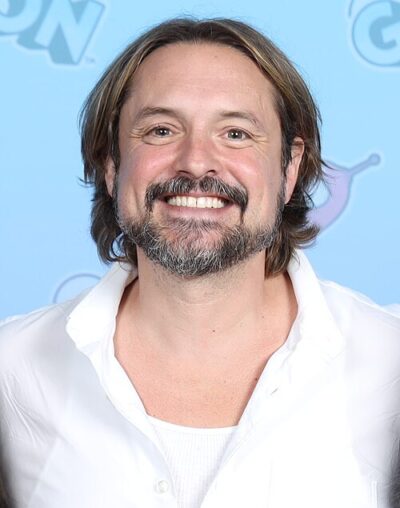
Will Friedle
Will Friedle is an American actor and comedian. Born August 11, 1976, in Hartford. Educated at Occidental College and Avon High School.
Facts
8 facts · 1 confirmed by two sources · 0 cited · 7 from one source
Where this comes from
Papalocal keeps its own record. It started from these sources; what each one said is kept here as it was copied, so a change on their side never changes this page by itself. Tap one to read its version.
What Wikidata says · copied November 16, 2026 · revision 2563127822
- Described as
- American actor and comedian
- Other names
- William Friedle, William A. Friedle
- Born
- August 11, 1976
- Born in
- Hartford
- Citizen of
- United States
- Occupation
- film actor; television actor; voice actor
- Education
- Occidental College; Avon High School · 1 reference
- Wikipedias with a page
- 20
Wikidata item Q2056174 (wikidata.org/wiki/Q2056174), public domain (CC0). Copied November 16, 2026.
What Wikipedia says · copied November 16, 2026 · revision 1385498999
Will Friedle (; born August 11, 1976) is an American actor and screenwriter. He is best known for his role as Eric Matthews in the ABC sitcom Boy Meets World (1993–2000).
In animation, Friedle's first voice acting role was the lead role of Terry McGinnis / Batman in Batman Beyond (1999–2001). He played a devil in H-E Double Hockey Sticks which also starred Matthew Lawrence. He also voiced Ron Stoppable in Kim Possible (2002–2007), Doyle Blackwell in The Secret Saturdays (2008), Jaime Reyes / Blue Beetle in Batman: The Brave and the Bold (2008–2011), Lion-O in the 2011–12 reboot of ThunderCats, Bumblebee in the Transformers franchise (2013–2017), Star-Lord in Guardians of the Galaxy (2015–2019), and Kashaw Vesh in The Legend of Vox Machina (2022).
- Born, in its opening lines
- August 11, 1976
From the Wikipedia article “Will Friedle” (en.wikipedia.org/wiki/Will_Friedle), by its contributors, under CC BY-SA 4.0 (creativecommons.org/licenses/by-sa/4.0/). Copied November 16, 2026; not changed.
Confirmed Two sources agree. Cited One source, and it names where it got it. One source One source, without a reference of its own. Sources disagree The sources disagree. We show the best-supported value and keep theirs below.
