
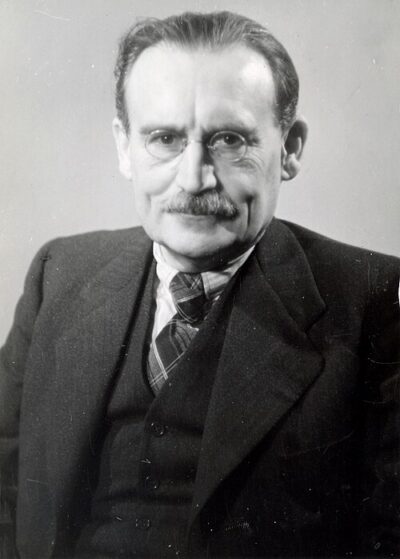
Willem Drees
Willem Drees was a Dutch politician. Born July 5, 1886, in Amsterdam. Died May 14, 1988, in The Hague. Positions held include Minister of Social Affairs (1945–1948), Prime Minister of the Netherlands (1948–1958) and member of the House of Representatives of the Netherlands (4 times) (1933–1956). Awards include Honorary Member of the World Esperanto Association, honorary doctor of the University of Maryland and Medal of Freedom.
Facts
46 facts · 2 confirmed by two sources · 19 cited · 25 from one source
Where this comes from
Papalocal keeps its own record. It started from these sources; what each one said is kept here as it was copied, so a change on their side never changes this page by itself. Tap one to read its version.
What Wikidata says · copied November 16, 2026 · revision 2569017570
- Described as
- Dutch politician (1886–1988)
- Other names
- W. Drees
- Born
- July 5, 1886 · 9 references
- Died
- May 14, 1988 · 9 references
- Born in
- Amsterdam · 2 references
- Died in
- The Hague · 3 references
- Buried in
- Oud Eik en Duinen
- Citizen of
- Kingdom of the Netherlands
- Occupation
- politician · 1 reference; resistance fighter; autobiographer · 1 reference; bank teller (1903–1906) · 1 reference; stenographer (1907–1919) · 1 reference
- Positions held
- Minister of Social Affairs (1945–1948) · 1 reference; Prime Minister of the Netherlands (1948–1958); member of the House of Representatives of the Netherlands (4 times) (1933–1956) · 1 reference; Minister of Finance (1952) · 1 reference; Deputy Prime Minister of the Netherlands (1945–1948); municipal councillor of The Hague; municipal executive of The Hague
- Political party
- Labour Party (1946–1971) · 1 reference; Social Democratic Workers' Party (1904–1946) · 1 reference
- Worked for
- Beweging voor het Democratische Socialisme · 1 reference
- Member of
- Federation of Worker-Esperantists; Dutch East Indies hostages · 1 reference
- Awards
- Honorary Member of the World Esperanto Association; honorary doctor of the University of Maryland; Medal of Freedom; Knight Grand Cross in the Order of the Netherlands Lion; Knight Grand Cross of the Order of St Michael and St George; Grand Cordon of the Order of Leopold (1949) · 1 reference; Grand Cross of the Order of the Dannebrog; Order of the Holy Trinity; Grand Cross of the Legion of Honour; Grand Cross of the Order of George I; Grand Cross of the Order of the Star of Africa; Grand Cross of the Order of Adolphe of Nassau; Grand Cross of the Order of the Oak Crown; Knight Grand Cross of the Order of St. Olav; Knight Grand Cross of the Order of Vasa (1955) · 1 reference
- Spouse
- Catharina Drees-Hent
- Children
- Willem Drees jr. · 1 reference
- Lived in
- Amsterdam (1886–1910); 2e Schuytstraat (1910–1918) · 1 reference; Van Bleiswijkstraat (1918–) · 1 reference; Marnixkade (1889–) · 1 reference; Haarlemmerplein (1886–1889) · 1 reference
- Height
- 1.73 m (5 ft 8 in) · 1 reference
- Wikipedias with a page
- 57
Wikidata item Q12769 (wikidata.org/wiki/Q12769), public domain (CC0). Copied November 16, 2026.
What Wikipedia says · copied November 16, 2026 · revision 1371983601
Willem Drees Sr. (; 5 July 1886 – 14 May 1988) was a Dutch politician of the Social Democratic Workers' Party (SDAP) and later co-founder of the Labour Party (PvdA) and historian who served as Prime Minister of the Netherlands from 7 August 1948 to 22 December 1958.
Drees was elected to the House of Representatives for the SDAP in the 1933 general election. He succeeded Willem Albarda as party leader in 1940 and, following the end of World War II, was appointed Deputy Prime Minister and Minister of Social Affairs in the national unity Schermerhorn–Drees cabinet. In February 1946, Drees was one of the co-founders of the Labour Party and became its first leader. After the 1948 general election, Drees became Prime Minister of the Drees–Van Schaik cabinet.
The Drees-Van Schaik cabinet fell on 24 January 1951 and after a short cabinet formation was replaced by the first Drees cabinet, with Drees continuing as Prime Minister. For the 1952 general election, Drees served again as lead candidate and following a successful cabinet formation formed the second Drees cabinet and continued as Prime Minister for a second term. For the 1956 general election Drees once again served as lead candidate and following another cabinet formation formed the third Drees cabinet and continued as Prime Minister for a third term. The third Drees cabinet fell on 11 December 1958 and shortly thereafter Drees announced his retirement and would step down as leader and would not serve another term as prime minister. Drees left office upon the installation of the caretaker second Beel cabinet on 22 December 1958.
Drees was known for his abilities as a skilful team leader and effective manager. From 1948 to 1958, his four cabinets were mostly praised and supported by the largest parties in the Netherlands. During his premiership, his cabinets were responsible for several major social reforms to social security, welfare, child benefits and education, overseeing the decolonization of the Dutch East Indies following the Indonesian National Revolution, the fallout of the annexation of former German territory and dealing with several major crises such as the North Sea flood of 1953 and Hofmans scandal.
Drees retired from active politics at 72 but continued to be active as a valued historian and prolific author and served on several state commissions and councils on behalf of the government. Drees was granted the honorary title of Minister of State on 22 December 1958 and continued to comment on political affairs as a statesman until his death in May 1988. He holds the record as the fourth longest-serving and longest-lived Prime Minister at 101 and his premiership is consistently regarded both by scholars and the public to have been one of the best in Dutch history.
- Born, in its opening lines
- July 5, 1886
- Died, in its opening lines
- May 14, 1988
From the Wikipedia article “Willem Drees” (en.wikipedia.org/wiki/Willem_Drees), by its contributors, under CC BY-SA 4.0 (creativecommons.org/licenses/by-sa/4.0/). Copied November 16, 2026; not changed.
Confirmed Two sources agree. Cited One source, and it names where it got it. One source One source, without a reference of its own. Sources disagree The sources disagree. We show the best-supported value and keep theirs below.
