
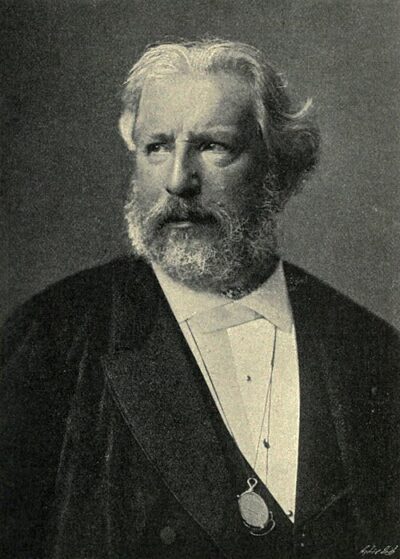
William-Adolphe Bouguereau
William-Adolphe Bouguereau was a French academic painter. Born November 30, 1825, in La Rochelle. Died August 19, 1905, in La Rochelle. Positions held include chairperson (1885–1905). Known for The Birth of Venus, Dante and Virgil in Hell and Nymphs and Satyr. Educated at Beaux-Arts de Paris and French Academy in Rome. Awards include Prix de Rome (2 times), Grand Officer of the Legion of Honour and Knight of the Legion of Honour.
Facts
44 facts · 2 confirmed by two sources · 16 cited · 26 from one source
Where this comes from
Papalocal keeps its own record. It started from these sources; what each one said is kept here as it was copied, so a change on their side never changes this page by itself. Tap one to read its version.
What Wikidata says · copied November 16, 2026 · revision 2569898824
- Described as
- French academic painter (1825–1905)
- Other names
- William Bouguereau, Adolphe William Bouguereau, William Adolphe Bouguereau, Adolphe-William Bouguereau, w.m bouguereau, Bougereau, w.a. bouguereau, W Bourgureau, william bouguereau, W. Bouguereau, w. a. bouguereau, wm bouguereau
- Born
- November 30, 1825 · 18 references
- Died
- August 19, 1905 · 15 references
- Born in
- La Rochelle · 3 references
- Died in
- La Rochelle · 4 references
- Buried in
- Montparnasse Cemetery
- Name at birth
- Adolphe Williams Bouguereau
- Citizen of
- France · 1 reference
- Occupation
- painter · 3 references; architectural drafter · 1 reference
- Positions held
- chairperson (1885–1905) · 1 reference
- Worked for
- Beaux-Arts de Paris
- Education
- Beaux-Arts de Paris (1846–1850); French Academy in Rome (1851–1853) · 1 reference
- Member of
- Académie des beaux-arts (1876–); Fondation Taylor
- Genre
- portrait · 1 reference; figure painting · 1 reference; mythological painting · 1 reference
- Known for
- The Birth of Venus; Dante and Virgil in Hell; Nymphs and Satyr; The Shepherdess; The First Mourning; The Elder Sister; Amor and Psyche, children; The Return of Spring; The Dance
- Awards
- Prix de Rome (2 times) (1848, 1850); Grand Officer of the Legion of Honour (1903–); Knight of the Legion of Honour (1859–); Officer of the Legion of Honour (1876–); Commander of the Legion of Honour (1881–); Commander of the Order of Isabella the Catholic
- Field
- painting
- Spouse
- Marie-Nelly Monchablon (1866–1877) · 1 reference; Elizabeth Jane Gardner (1896–1905)
- Children
- Henriette Vincens · 1 reference; Georges Bouguereau · 1 reference; Jeanne Bouguereau · 1 reference; Paul Bouguereau · 1 reference; Maurice Bouguereau · 1 reference
- Father
- Théodore Bouguereau · 1 reference
- Mother
- Marie Bonnin · 1 reference
- Lived in
- Hôtel particulier, 15 rue Verdière, La Rochelle
- Wikipedias with a page
- 63
Wikidata item Q483992 (wikidata.org/wiki/Q483992), public domain (CC0). Copied November 16, 2026.
What Wikipedia says · copied November 16, 2026 · revision 1385183160
William-Adolphe Bouguereau (French pronunciation: [wiljam adɔlf buɡ(ə)ʁo]; 30 November 1825 – 19 August 1905) was a French academic painter. In his realistic genre paintings, he used mythological themes, making modern interpretations of classical subjects, with an emphasis on the female human body. During his life, he enjoyed significant popularity in France and the United States, was given numerous official honors, and received top prices for his work. As the quintessential salon painter of his generation, he was reviled by the Impressionist avant-garde. By the early twentieth century, Bouguereau and his art fell out of favor with the public, due in part to changing tastes. In the 1980s, a revival of interest in figure painting led to a rediscovery of Bouguereau and his work. He finished 822 known paintings, but the whereabouts of many are unknown.
- Born, in its opening lines
- November 30, 1825
- Died, in its opening lines
- August 19, 1905
From the Wikipedia article “William-Adolphe Bouguereau” (en.wikipedia.org/wiki/William-Adolphe_Bouguereau), by its contributors, under CC BY-SA 4.0 (creativecommons.org/licenses/by-sa/4.0/). Copied November 16, 2026; not changed.
Confirmed Two sources agree. Cited One source, and it names where it got it. One source One source, without a reference of its own. Sources disagree The sources disagree. We show the best-supported value and keep theirs below.
