
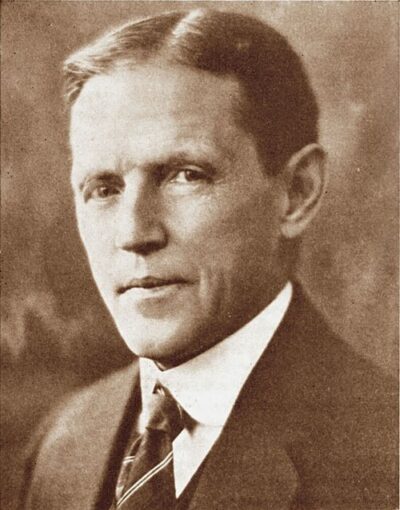
William Bates
William Bates was an American ophthalmologist. Born December 23, 1860, in Newark. Died July 10, 1931, in New York City. Educated at Cornell University and Columbia University Vagelos College of Physicians and Surgeons.
Facts
11 facts · 2 confirmed by two sources · 2 cited · 7 from one source
Where this comes from
Papalocal keeps its own record. It started from these sources; what each one said is kept here as it was copied, so a change on their side never changes this page by itself. Tap one to read its version.
What Wikidata says · copied November 18, 2026 · revision 2567193721
- Described as
- American ophthalmologist (1860-1931)
- Other names
- William Horatio Bates, William H. Bates
- Born
- December 23, 1860
- Died
- July 10, 1931 · 4 references
- Born in
- Newark
- Died in
- New York City · 1 reference
- Citizen of
- United States
- Occupation
- physician; ophthalmologist · 1 reference; scientist · 1 reference
- Education
- Cornell University; Columbia University Vagelos College of Physicians and Surgeons
- Field
- ophthalmology · 1 reference
- Wikipedias with a page
- 19
Wikidata item Q512902 (wikidata.org/wiki/Q512902), public domain (CC0). Copied November 18, 2026.
What Wikipedia says · copied November 18, 2026 · revision 1372768846
William Horatio Bates (December 23, 1860 – July 10, 1931) was an American physician who practiced ophthalmology and developed what became known as the Bates method for better eyesight. The method was based in his theory that the eye does not focus by changing the power of the lens, but rather by elongating the eyeball through use of the extraocular oblique muscles; this model contradicted mainstream ophthalmology and optometry then and now.
- Born, in its opening lines
- December 23, 1860
- Died, in its opening lines
- July 10, 1931
From the Wikipedia article “William Bates (physician)” (en.wikipedia.org/wiki/William_Bates_(physician)), by its contributors, under CC BY-SA 4.0 (creativecommons.org/licenses/by-sa/4.0/). Copied November 18, 2026; not changed.
Confirmed Two sources agree. Cited One source, and it names where it got it. One source One source, without a reference of its own. Sources disagree The sources disagree. We show the best-supported value and keep theirs below.
