
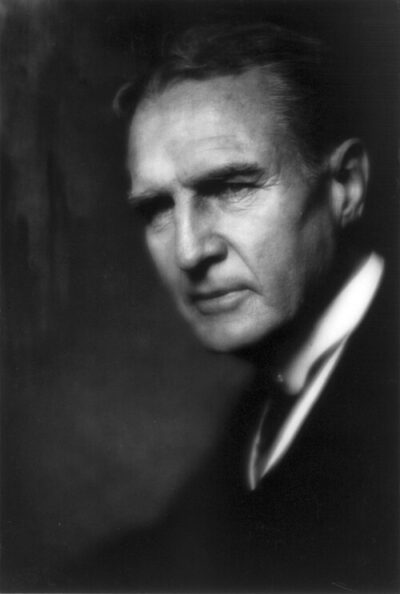
William Gillette
William Gillette was an American actor, inventor and writer. Born July 24, 1853, in Hartford. Died April 29, 1937, in Hartford.
Facts
24 facts · 2 confirmed by two sources · 10 cited · 12 from one source
Where this comes from
Papalocal keeps its own record. It started from these sources; what each one said is kept here as it was copied, so a change on their side never changes this page by itself. Tap one to read its version.
What Wikidata says · copied November 16, 2026 · revision 2563075351
- Described as
- American actor, inventor and writer (1853-1937)
- Other names
- W. H. Gillette, William Hooker Gillette
- Born
- July 24, 1853 · 1 reference
- Died
- April 29, 1937 · 2 references
- Born in
- Hartford
- Died in
- Hartford
- Buried in
- Riverside Cemetery · 1 reference
- Cause of death
- pulmonary hemorrhage
- Citizen of
- United States
- Occupation
- actor · 2 references; screenwriter · 1 reference; stage actor; writer · 1 reference; voice actor; inventor · 1 reference; theatre director · 1 reference; playwright · 2 references
- Member of
- American Academy of Arts and Letters
- Field
- theatre · 1 reference; film · 1 reference; television · 1 reference; radio · 1 reference; radio broadcasting · 1 reference
- Father
- Francis Gillette
- Mother
- Eliza Daggett Hooker Gillette
- Siblings
- Edward H. Gillette
- Wikipedias with a page
- 22
Wikidata item Q983339 (wikidata.org/wiki/Q983339), public domain (CC0). Copied November 16, 2026.
What Wikipedia says · copied November 16, 2026 · revision 1384621779
William Hooker Gillette (July 24, 1853 – April 29, 1937) was an American actor-manager, playwright, and stage manager in the late 19th and early 20th centuries. He is best remembered for portraying Sherlock Holmes on stage and in a 1916 silent film.
Gillette's most significant contributions to the theater were in devising realistic stage settings and special sound and lighting effects, and as an actor in putting forth what he called the "Illusion of the First Time." His portrayal of Holmes helped create the modern image of the detective. His use of the deerstalker cap (which first appeared in some Strand illustrations by Sidney Paget) and the curved pipe became enduring symbols of the character. He assumed the role on stage more than 1,300 times over thirty years, starred in the silent motion picture based on his Holmes play, and voiced the character twice on radio.
His first Civil War drama Held by the Enemy (1886) was a major step toward modern theater, in that it abandoned many of the crude devices of 19th-century melodrama and introduced realism into the sets, costumes, props, and sound effects. It was produced at a time when the British had a very low opinion of American art in any form, and it was the first wholly American play with a wholly American theme to be a critical and commercial success on British stages. In November 1915 he was elected a member of the American Academy of Arts and Sciences.
- Born, in its opening lines
- July 24, 1853
- Died, in its opening lines
- April 29, 1937
From the Wikipedia article “William Gillette” (en.wikipedia.org/wiki/William_Gillette), by its contributors, under CC BY-SA 4.0 (creativecommons.org/licenses/by-sa/4.0/). Copied November 16, 2026; not changed.
Confirmed Two sources agree. Cited One source, and it names where it got it. One source One source, without a reference of its own. Sources disagree The sources disagree. We show the best-supported value and keep theirs below.
