
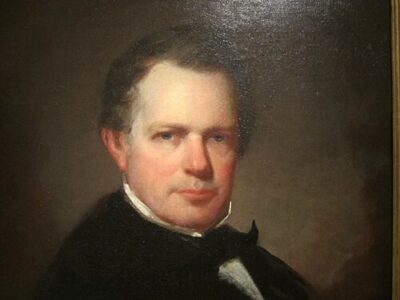
William Gilmore Simms
William Gilmore Simms was an American writer. Born April 17, 1806, in Charleston. Died June 11, 1870, in Charleston.
Facts
11 facts · 2 confirmed by two sources · 1 cited · 8 from one source
Where this comes from
Papalocal keeps its own record. It started from these sources; what each one said is kept here as it was copied, so a change on their side never changes this page by itself. Tap one to read its version.
What Wikidata says · copied November 16, 2026 · revision 2521296529
- Described as
- American writer (1806–1870)
- Born
- April 17, 1806 · 5 references
- Died
- June 11, 1870 · 5 references
- Born in
- Charleston
- Died in
- Charleston
- Buried in
- Magnolia Cemetery · 1 reference
- Citizen of
- United States
- Occupation
- lawyer; novelist; poet; historian · 1 reference; writer · 4 references
- Wikipedias with a page
- 20
Wikidata item Q2336138 (wikidata.org/wiki/Q2336138), public domain (CC0). Copied November 16, 2026.
What Wikipedia says · copied November 16, 2026 · revision 1383256183
William Gilmore Simms (April 17, 1806 – June 11, 1870) was an American poet, novelist, politician and historian from the American South. His writings achieved great prominence during the 19th century, with Edgar Allan Poe pronouncing him the best novelist America had ever produced. He is still known among literary scholars as a major force in antebellum Southern literature. He is also remembered for his strong support of slavery and for his opposition to Uncle Tom's Cabin, in response to which he wrote reviews and the pro-slavery novel The Sword and the Distaff (1854). During his literary career he served as editor of several journals and newspapers and he also served in the South Carolina House of Representatives.
- Born, in its opening lines
- April 17, 1806
- Died, in its opening lines
- June 11, 1870
From the Wikipedia article “William Gilmore Simms” (en.wikipedia.org/wiki/William_Gilmore_Simms), by its contributors, under CC BY-SA 4.0 (creativecommons.org/licenses/by-sa/4.0/). Copied November 16, 2026; not changed.
Confirmed Two sources agree. Cited One source, and it names where it got it. One source One source, without a reference of its own. Sources disagree The sources disagree. We show the best-supported value and keep theirs below.
