
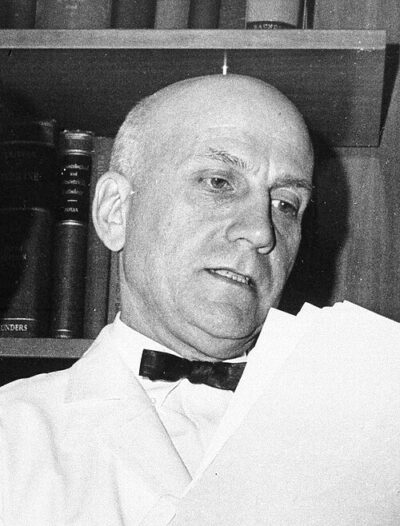
William H. Masters
William H. Masters was an American gynecologist. Born December 27, 1915, in Cleveland. Died February 16, 2001, in Tucson. Educated at Hamilton College and URochester Medicine.
Facts
15 facts · 2 confirmed by two sources · 0 cited · 13 from one source
Where this comes from
Papalocal keeps its own record. It started from these sources; what each one said is kept here as it was copied, so a change on their side never changes this page by itself. Tap one to read its version.
What Wikidata says · copied November 16, 2026 · revision 2563085895
- Described as
- American gynecologist (1915–2001)
- Other names
- William Howell Masters, William Masters
- Born
- December 27, 1915 · 7 references
- Died
- February 16, 2001 · 6 references
- Born in
- Cleveland
- Died in
- Tucson
- Cause of death
- Parkinson's disease
- Citizen of
- United States
- Occupation
- physician; sex educator; gynecologist; author · 1 reference
- Worked for
- Washington University in St. Louis
- Education
- Hamilton College; URochester Medicine
- Member of
- Masters and Johnson · 1 reference
- Spouse
- Virginia E. Johnson (1971–1992)
- Wikipedias with a page
- 21
Wikidata item Q3235877 (wikidata.org/wiki/Q3235877), public domain (CC0). Copied November 16, 2026.
What Wikipedia says · copied November 16, 2026 · revision 1384853111
William Howell Masters (December 27, 1915 – February 16, 2001) was an American gynecologist and the senior member of the Masters and Johnson human sexuality research team. Along with his partner Virginia E. Johnson, he pioneered research into the nature of human sexual response and the diagnosis and treatment of sexual dysfunctions and disorders from 1957 until the 1990s.
- Born, in its opening lines
- December 27, 1915
- Died, in its opening lines
- February 16, 2001
From the Wikipedia article “William Masters” (en.wikipedia.org/wiki/William_Masters), by its contributors, under CC BY-SA 4.0 (creativecommons.org/licenses/by-sa/4.0/). Copied November 16, 2026; not changed.
Confirmed Two sources agree. Cited One source, and it names where it got it. One source One source, without a reference of its own. Sources disagree The sources disagree. We show the best-supported value and keep theirs below.
