
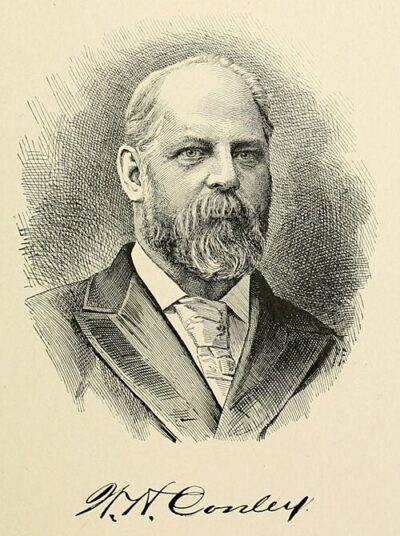
William Henry Conley
William Henry Conley was an American industrialist, and first president of Zion's Watch Tower Tract Society. Born June 11, 1840, in Pittsburgh. Died July 25, 1897, in Pittsburgh.
Facts
9 facts · 2 confirmed by two sources · 0 cited · 7 from one source
Where this comes from
Papalocal keeps its own record. It started from these sources; what each one said is kept here as it was copied, so a change on their side never changes this page by itself. Tap one to read its version.
What Wikidata says · copied November 18, 2026 · revision 2508356461
- Described as
- American industrialist, and first president of Zion's Watch Tower Tract Society (1840-1897)
- Other names
- W. H. Conley
- Born
- June 11, 1840
- Died
- July 25, 1897
- Born in
- Pittsburgh
- Died in
- Pittsburgh
- Buried in
- Highwood Cemetery
- Cause of death
- influenza
- Citizen of
- United States
- Occupation
- politician; businessperson · 1 reference
- Wikipedias with a page
- 17
Wikidata item Q933849 (wikidata.org/wiki/Q933849), public domain (CC0). Copied November 18, 2026.
What Wikipedia says · copied November 18, 2026 · revision 1348787982
William Henry Conley
(11 June 1840 – 25 July 1897), was a Pittsburgh philanthropist and industrialist. He was married to Sarah Shaffer (1841–1908). Together, they provided organizational and financial support to religious institutions in the United States. William Conley was trained by his uncle in the printing business for ten years. Conley was co-owner of the Riter Conley Company, which provided steel and manufactured goods during the Second Industrial Revolution.
- Born, in its opening lines
- June 11, 1840
- Died, in its opening lines
- July 25, 1897
From the Wikipedia article “William Henry Conley” (en.wikipedia.org/wiki/William_Henry_Conley), by its contributors, under CC BY-SA 4.0 (creativecommons.org/licenses/by-sa/4.0/). Copied November 18, 2026; not changed.
Confirmed Two sources agree. Cited One source, and it names where it got it. One source One source, without a reference of its own. Sources disagree The sources disagree. We show the best-supported value and keep theirs below.
