
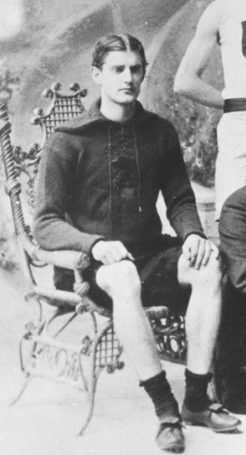
William Hoyt
William Hoyt was an American pole vaulter. Born May 7, 1875, in Glastonbury. Died December 1, 1954, in Cambridge. Educated at Roxbury Latin School.
Facts
11 facts · 2 confirmed by two sources · 3 cited · 6 from one source
Where this comes from
Papalocal keeps its own record. It started from these sources; what each one said is kept here as it was copied, so a change on their side never changes this page by itself. Tap one to read its version.
What Wikidata says · copied November 15, 2026 · revision 2539511813
- Described as
- American pole vaulter (1875–1954)
- Other names
- William Welles Hoyt
- Born
- May 7, 1875 · 1 reference
- Died
- December 1, 1954 · 2 references
- Born in
- Glastonbury
- Died in
- Cambridge · 1 reference
- Buried in
- Calvary Cemetery · 1 reference
- Citizen of
- United States
- Occupation
- pole vaulter; athletics competitor
- Education
- Roxbury Latin School
- Sport
- athletics
- Mother
- Anna Maria "Mary" Hoyt (Welles) · 1 reference
- Wikipedias with a page
- 30
Wikidata item Q318013 (wikidata.org/wiki/Q318013), public domain (CC0). Copied November 15, 2026.
What Wikipedia says · copied November 15, 2026 · revision 1366922033
William Welles Hoyt (May 7, 1875 – December 1, 1954) was an American track and field athlete. He competed at the 1896 Summer Olympics in Athens. He was born in Glastonbury, Connecticut.
Hoyt competed in the pole vault, winning the event with a height of 3.30 metres. He also ran the 110 metres hurdles. He placed second in his heat, after Thomas Curtis, but did not run in the final.
- Born, in its opening lines
- May 7, 1875
- Died, in its opening lines
- December 1, 1954
From the Wikipedia article “William Hoyt (athlete)” (en.wikipedia.org/wiki/William_Hoyt_(athlete)), by its contributors, under CC BY-SA 4.0 (creativecommons.org/licenses/by-sa/4.0/). Copied November 15, 2026; not changed.
Confirmed Two sources agree. Cited One source, and it names where it got it. One source One source, without a reference of its own. Sources disagree The sources disagree. We show the best-supported value and keep theirs below.
