
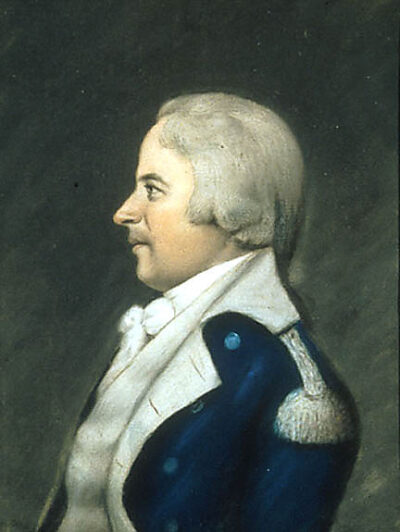
William Hull
William Hull was an American soldier and politician. Born June 24, 1753, in Derby. Died November 29, 1825, in Newton. Positions held include Governor of Michigan (1805–1813) and member of the State Senate of Massachusetts. Educated at Yale University.
Facts
23 facts · 2 confirmed by two sources · 9 cited · 12 from one source
Where this comes from
Papalocal keeps its own record. It started from these sources; what each one said is kept here as it was copied, so a change on their side never changes this page by itself. Tap one to read its version.
What Wikidata says · copied November 18, 2026 · revision 2556599654
- Described as
- American soldier and politician (1753-1825)
- Born
- June 24, 1753 · 3 references
- Died
- November 29, 1825 · 3 references
- Born in
- Derby
- Died in
- Newton
- Buried in
- East Parish Burying Ground · 1 reference
- Citizen of
- United States
- Occupation
- lawyer; politician · 1 reference; judge; governor · 1 reference; jurist · 1 reference
- Positions held
- Governor of Michigan (1805–1813); member of the State Senate of Massachusetts
- Education
- Yale University
- Children
- Julia Knox Wheeler · 1 reference; Nancy Binney "Anne" Hickman · 1 reference; Rebecca Parker Hull; Sarah Hull McKesson
- Father
- Joseph Hull · 1 reference
- Mother
- Eliza Hull · 1 reference
- Military rank
- general; Lieutenant Colonel · 1 reference
- Lived in
- Massachusetts
- Wikipedias with a page
- 14
Wikidata item Q881002 (wikidata.org/wiki/Q881002), public domain (CC0). Copied November 18, 2026.
What Wikipedia says · copied November 18, 2026 · revision 1383635140
Brigadier General William Hull (June 24, 1753 – November 29, 1825) was an American army officer and politician. A veteran of the American Revolutionary War, he later served as governor of the Michigan Territory (1805–1813), where he negotiated land cessions with Native Americans through the Treaty of Detroit in 1807. Hull is most widely remembered as the general in the first months of the War of 1812 (1812–1815) who surrendered Fort Detroit to the British Army on August 16, 1812, ending the siege of Detroit.
Following the siege, he was paroled by the British and returned east, but court-martialed, convicted, and sentenced to death in a military court trial by the United States Army and the U.S. War Department, but later received a pardon from fourth President and military commander-in-chief James Madison (1751–1836, served 1809–1817), so his military and personal reputation somewhat recovered. He was assigned to several other commands in the next two years of the war, before the 1815 peace Treaty of Ghent and return to the pre-war status quo with the British.
- Born, in its opening lines
- June 24, 1753
- Died, in its opening lines
- November 29, 1825
From the Wikipedia article “William Hull” (en.wikipedia.org/wiki/William_Hull), by its contributors, under CC BY-SA 4.0 (creativecommons.org/licenses/by-sa/4.0/). Copied November 18, 2026; not changed.
Confirmed Two sources agree. Cited One source, and it names where it got it. One source One source, without a reference of its own. Sources disagree The sources disagree. We show the best-supported value and keep theirs below.
