
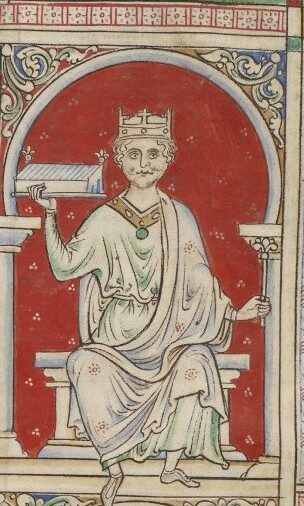
William II of England
William II of England was a King of England from 1087 to 1100. Born 1060, in Normandy. Died August 2, 1100, in New Forest National Park. Positions held include Monarch of England (1087–1100).
Facts
18 facts · 1 confirmed by two sources · 9 cited · 7 from one source · 1 where the sources disagree
What’s different
- Born: we show 1060 (Sources disagree). Wikidata also lists 1058 and 1056
Where this comes from
Papalocal keeps its own record. It started from these sources; what each one said is kept here as it was copied, so a change on their side never changes this page by itself. Tap one to read its version.
What Wikidata says · copied November 16, 2026 · revision 2568983527
- Described as
- King of England from 1087 to 1100
- Other names
- William II 'Rufus', King of England, William II, William the Red, William Rufus
- Born
- 1060 · 3 references; 1058 · 1 reference; 1056 · 2 references
- Died
- August 2, 1100 · 1 reference
- Born in
- Normandy · 1 reference
- Died in
- New Forest National Park · 1 reference
- Buried in
- Winchester Cathedral · 1 reference
- Cause of death
- hunting accident · 1 reference
- Occupation
- king
- Positions held
- Monarch of England (1087–1100)
- Father
- William the Conqueror · 2 references
- Mother
- Matilda of Flanders · 2 references
- Siblings
- Adeliza; Adela of Normandy · 1 reference; Constance of Normandy; Cecilia of Normandy; Robert Curthose; Richard of Normandy; Henry I of England · 1 reference
- Nickname
- Rufus · 1 reference
- Wikipedias with a page
- 73
Wikidata item Q102005 (wikidata.org/wiki/Q102005), public domain (CC0). Copied November 16, 2026.
What Wikipedia says · copied November 16, 2026 · revision 1385631238
William II (Anglo-Norman: Williame; c. 1057 – 2 August 1100) was King of England from 26 September 1087 until his death in 1100, with powers over Normandy and influence in Scotland. He was less successful in extending his control into Wales. The third son of William the Conqueror, he is commonly referred to as William Rufus (Rufus being Latin for 'the Red'), perhaps because of his ruddy appearance or, more likely, because he had red hair.
William was a figure of complex temperament, capable of both bellicosity and flamboyance. He did not marry or have children, which – along with contemporary accounts – has led some historians to speculate on his sexuality. He died after being hit by an arrow while hunting. Circumstantial evidence in the behaviour of those around him – including his younger brother Henry I – raises strong but unproven suspicions of murder. Upon William's death, Henry immediately seized the treasury and had himself crowned king.
Historian Frank Barlow writes that William was a "rumbustious, devil-may-care soldier, without natural dignity or social graces, with no cultivated tastes and little show of conventional religious piety or morality – indeed, according to his critics, addicted to every kind of vice, particularly lust and especially sodomy." On the other hand, he was a wise ruler and victorious general, Barlow writes: "His chivalrous virtues and achievements were all too obvious. He had maintained good order and satisfactory justice in England and restored good peace to Normandy. He had extended Anglo-Norman rule in Wales, brought Scotland firmly under his lordship, recovered Maine, and kept up the pressure on the Vexin."
- Born, in its opening lines
- c. 1057
- Died, in its opening lines
- August 2, 1100
From the Wikipedia article “William II of England” (en.wikipedia.org/wiki/William_II_of_England), by its contributors, under CC BY-SA 4.0 (creativecommons.org/licenses/by-sa/4.0/). Copied November 16, 2026; not changed.
Confirmed Two sources agree. Cited One source, and it names where it got it. One source One source, without a reference of its own. Sources disagree The sources disagree. We show the best-supported value and keep theirs below.
