
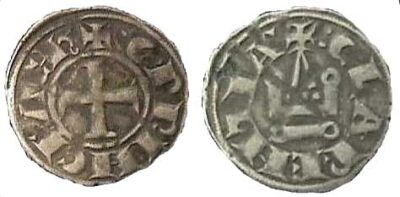
William II of Villehardouin was a Prince of Achaea from 1246 to 1278. Born 1211, in Kalamata. Died May 1, 1278, in Kalamata. Positions held include Prince of Achaea.
Facts
16 facts · 2 confirmed by two sources · 0 cited · 14 from one source
Where this comes from
Papalocal keeps its own record. It started from these sources; what each one said is kept here as it was copied, so a change on their side never changes this page by itself. Tap one to read its version.
What Wikidata says · copied November 17, 2026 · revision 2553918693
- Described as
- Prince of Achaea from 1246 to 1278
- Other names
- Guillaume II de Villehardouin, William of Villehardouin
- Born
- 1211
- Died
- May 1, 1278
- Born in
- Kalamata
- Died in
- Kalamata
- Citizen of
- France
- Occupation
- poet; composer
- Positions held
- Prince of Achaea
- Spouse
- Anna Komnene Doukaina; Carintana dalle Carceri (1246–); (Agnes) de Toucy
- Children
- Isabella of Villehardouin; Margaret of Villehardouin
- Father
- Geoffrey I of Villehardouin
- Mother
- Elisabeth (de Chappes)
- Siblings
- Geoffrey II of Villehardouin
- Wikipedias with a page
- 25
Wikidata item Q451156 (wikidata.org/wiki/Q451156), public domain (CC0). Copied November 17, 2026.
What Wikipedia says · copied November 17, 2026 · revision 1374709039
William of Villehardouin (French: Guillaume de Villehardouin; Kalamata, c. 1211 – 1 May 1278, Kalamatha) was the fourth prince of Achaea in Frankish Greece, from 1246 to 1278. The younger son of Prince Geoffrey I, he held the Barony of Kalamata in fief during the reign of his elder brother Geoffrey II. William ruled Achaea as regent for his brother during Geoffrey's military campaigns against the Greeks of Nicaea, who were the principal enemies of his overlord, the Latin Emperor of Constantinople, Baldwin II. William succeeded his childless brother in the summer of 1246. Conflicts between Nicaea and Epirus enabled him to complete the conquest of the Morea in about three years. He captured Monemvasia and built three new fortresses, forcing two previously autonomous tribes, the Tzakones and Melingoi, into submission. He participated in the unsuccessful Egyptian crusade of Louis IX of France, who rewarded him with the right to issue currency in the style of French royal coins.
In the early 1250s, William was the most powerful ruler of Frankish Greece. Most neighboring Frankish rulers acknowledged his suzerainty. In 1255, he laid claim to the northern terziere, or third, of the Lordship of Negroponte on the island of Euboea. Although the two other rulers of Negroponte were his vassals, they rejected his claim. They gained the support of Venice, Guy I de la Roche, Lord of Athens, and other Frankish rulers. The conflict developed into a war of succession that caused much destruction in Euboea and mainland Greece. After William's victory in Attica in May 1258, Guy and his allies surrendered. Guy was tried for his disloyalty but was allowed to keep his Achaean fiefs.
A succession crisis in Nicaea prompted the Epirote ruler Michael II Komnenos Doukas to form an anti-Nicaean coalition with William and Manfred of Sicily. In the summer of 1259, William and Michael assembled the bulk of their armies and marched as far as Pelagonia to fight the Nicaeans. The Frankish and Epirote troops could not cooperate effectively, and archers from the enemy camp harassed them continuously. After the Epirotes abandoned their allies unexpectedly, the Nicaeans inflicted a decisive defeat on the Franks. William fled from the battlefield, but he was captured and sent to Nicaea. He was still in prison when Nicaean troops seized Constantinople and destroyed the Latin Empire in July 1261. The triumphant Byzantine emperor Michael VIII Palaiologos released William in return for three southern Morean fortresses in late 1261. The possession of the three forts facilitated further Byzantine expansion, and William was forced to seek external support. With the approval of Baldwin II, he swore fealty to the Angevin king of Sicily, Charles I. William acknowledged Charles and his descendants as his heirs in the Treaty of Viterbo on 24 May 1267. Charles sent troops to Achaea and with their help, William was able to resist Byzantine invasions during the last years of his reign.
- Born, in its opening lines
- c. 1211
- Died, in its opening lines
- May 1, 1278
From the Wikipedia article “William of Villehardouin” (en.wikipedia.org/wiki/William_of_Villehardouin), by its contributors, under CC BY-SA 4.0 (creativecommons.org/licenses/by-sa/4.0/). Copied November 17, 2026; not changed.
Confirmed Two sources agree. Cited One source, and it names where it got it. One source One source, without a reference of its own. Sources disagree The sources disagree. We show the best-supported value and keep theirs below.
