
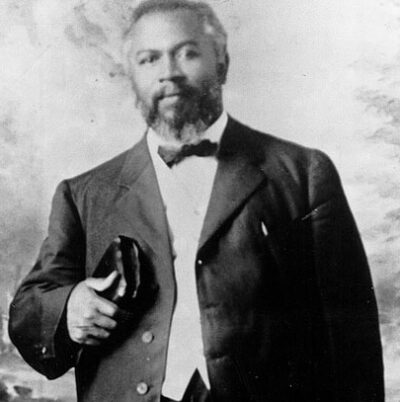
William J. Seymour
William J. Seymour was an American minister. Born May 2, 1870, in Acadiana. Died September 28, 1922, in Los Angeles California Temple.
Facts
11 facts · 2 confirmed by two sources · 3 cited · 6 from one source
Where this comes from
Papalocal keeps its own record. It started from these sources; what each one said is kept here as it was copied, so a change on their side never changes this page by itself. Tap one to read its version.
What Wikidata says · copied November 18, 2026 · revision 2518007330
- Described as
- American minister (1870–1922)
- Other names
- William Joseph Seymour
- Born
- May 2, 1870 · 2 references
- Died
- September 28, 1922 · 2 references
- Born in
- Acadiana
- Died in
- Los Angeles California Temple · 1 reference
- Buried in
- Evergreen Cemetery
- Cause of death
- heart failure
- Citizen of
- United States
- Occupation
- preacher · 1 reference; religious leader; evangelist · 1 reference
- Religion
- Pentecostalism
- Wikipedias with a page
- 18
Wikidata item Q648527 (wikidata.org/wiki/Q648527), public domain (CC0). Copied November 18, 2026.
What Wikipedia says · copied November 18, 2026 · revision 1379071676
William Joseph Seymour (May 2, 1870 – September 28, 1922) was an American Holiness Pentecostal preacher.
Seymour was the second of eight children born in an African-American family to emancipated slaves. He was a student of the early Pentecostal minister Charles Parham, and he adopted Parham's belief that speaking in tongues was the sign of receiving the baptism in the Holy Spirit. In 1906, Seymour moved to Los Angeles, California, where he preached the Pentecostal message and sparked the Azusa Street Revival. The revival drew large crowds of believers as well as media coverage that focused on controversial religious practices as well as the racially integrated congregation, atypical in light of racial norms in the United States at the time. Seymour's writings for The Apostolic Faith newspaper launched him into prominence within the young Pentecostal movement. Seymour broke with Parham in 1906 over theological differences.
As the revival's influence extended beyond Los Angeles through evangelism and missionary work, Seymour was in the process of developing the revival into a larger organization called the Apostolic Faith Movement. This process was ultimately defeated by power struggles with other ministers, such as Florence L. Crawford and William Howard Durham, which damaged the unity of the early Pentecostal movement and led to a decrease in Seymour's influence. By 1914, the revival was past its peak, but Seymour continued to pastor the Apostolic Faith Mission until his death. The revival acted as a catalyst for the spread of Pentecostal practices throughout the world.
- Born, in its opening lines
- May 2, 1870
- Died, in its opening lines
- September 28, 1922
From the Wikipedia article “William J. Seymour” (en.wikipedia.org/wiki/William_J._Seymour), by its contributors, under CC BY-SA 4.0 (creativecommons.org/licenses/by-sa/4.0/). Copied November 18, 2026; not changed.
Confirmed Two sources agree. Cited One source, and it names where it got it. One source One source, without a reference of its own. Sources disagree The sources disagree. We show the best-supported value and keep theirs below.
