
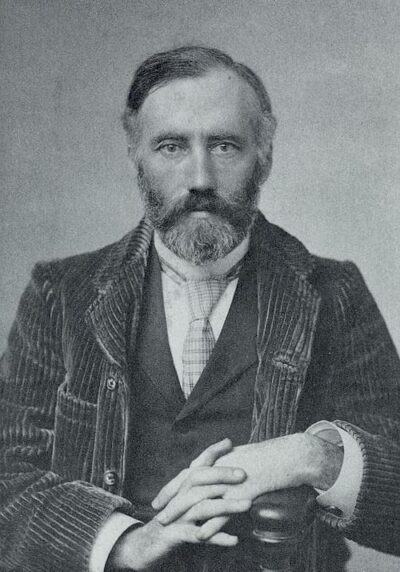
William Quan Judge
William Quan Judge was an American occult writer. Born April 13, 1851, in Dublin. Died March 21, 1896, in New York City.
Facts
10 facts · 2 confirmed by two sources · 4 cited · 4 from one source
Where this comes from
Papalocal keeps its own record. It started from these sources; what each one said is kept here as it was copied, so a change on their side never changes this page by itself. Tap one to read its version.
What Wikidata says · copied November 16, 2026 · revision 2558283422
- Described as
- American occult writer (1851–1896)
- Born
- April 13, 1851 · 3 references
- Died
- March 21, 1896 · 3 references
- Born in
- Dublin · 1 reference
- Died in
- New York City · 1 reference
- Citizen of
- United States; United Kingdom of Great Britain and Ireland
- Occupation
- writer; lawyer · 1 reference; theosophist · 1 reference
- Religion
- Theosophy
- Wikipedias with a page
- 20
Wikidata item Q548776 (wikidata.org/wiki/Q548776), public domain (CC0). Copied November 16, 2026.
What Wikipedia says · copied November 16, 2026 · revision 1376069012
William Quan Judge (13 April 1851 – 21 March 1896) was an Irish-born American lawyer, writer, and Theosophist. He co-founded the Theosophical Society with Helena Blavatsky and Henry Steel Olcott in 1875 and subsequently led its work in the United States.
Judge founded the journal The Path in 1886 and wrote The Ocean of Theosophy (1893). Following disputes with Olcott and Annie Besant over communications attributed to the Mahatmas, most American members separated from the international society in 1895. Judge became president of the independent Theosophical Society in America and held that position until his death in 1896.
- Born, in its opening lines
- April 13, 1851
- Died, in its opening lines
- March 21, 1896
From the Wikipedia article “William Quan Judge” (en.wikipedia.org/wiki/William_Quan_Judge), by its contributors, under CC BY-SA 4.0 (creativecommons.org/licenses/by-sa/4.0/). Copied November 16, 2026; not changed.
Confirmed Two sources agree. Cited One source, and it names where it got it. One source One source, without a reference of its own. Sources disagree The sources disagree. We show the best-supported value and keep theirs below.
