
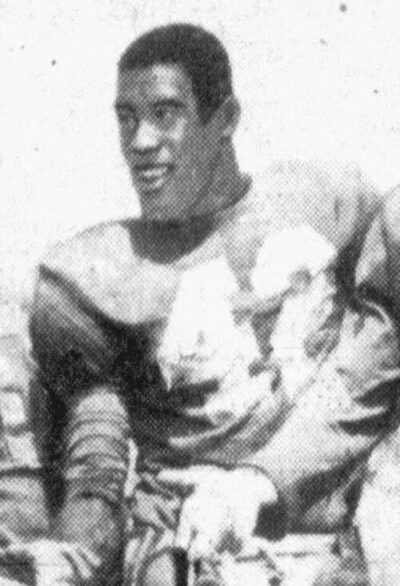
Willie Steele
Willie Steele was an American long jumper. Born July 14, 1923, in Seeley. Died September 19, 1989, in Oakland. Educated at San José State University and San Diego State University.
Facts
11 facts · 2 confirmed by two sources · 3 cited · 6 from one source
Where this comes from
Papalocal keeps its own record. It started from these sources; what each one said is kept here as it was copied, so a change on their side never changes this page by itself. Tap one to read its version.
What Wikidata says · copied November 16, 2026 · revision 2564936847
- Described as
- American long jumper (1923–1989)
- Other names
- William Samuel "Willie" Steele, William Samuel Steele, Willie S. Steele
- Born
- July 14, 1923
- Died
- September 19, 1989
- Born in
- Seeley
- Died in
- Oakland
- Citizen of
- United States
- Occupation
- athletics competitor · 1 reference
- Education
- San José State University; San Diego State University · 1 reference; Hoover High School · 1 reference
- Sport
- athletics
- Height
- 1.80 m (5 ft 11 in) · 1 reference
- Wikipedias with a page
- 20
Wikidata item Q1340097 (wikidata.org/wiki/Q1340097), public domain (CC0). Copied November 16, 2026.
What Wikipedia says · copied November 16, 2026 · revision 1364200401
William Samuel Steele (July 14, 1923 – September 19, 1989) was an American athlete who competed mainly in the long jump. Steele won the gold medal in the long jump at the 1948 London Olympics. A two-time USA Outdoor champion, Steele was the 1948 Olympic Trials champion and a two-time NCAA long jump champion. He was considered the world's best long jumper in 1942 and 1946, and was world ranked #1 by Track & Field News their first two years of producing worldwide rankings, 1947 and 1948.
- Born, in its opening lines
- July 14, 1923
- Died, in its opening lines
- September 19, 1989
From the Wikipedia article “Willie Steele” (en.wikipedia.org/wiki/Willie_Steele), by its contributors, under CC BY-SA 4.0 (creativecommons.org/licenses/by-sa/4.0/). Copied November 16, 2026; not changed.
Confirmed Two sources agree. Cited One source, and it names where it got it. One source One source, without a reference of its own. Sources disagree The sources disagree. We show the best-supported value and keep theirs below.
