
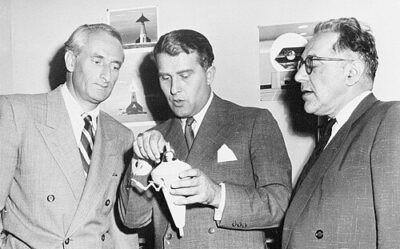
Willy Ley
Willy Ley was a German-American science and science-fiction writer. Born October 2, 1906, in Berlin. Died June 24, 1969, in New York City. Awards include Hugo Award for Best Feature Writer, International Space Hall of Fame and International Fantasy Award for Best Non Fiction (2 times).
Facts
18 facts · 2 confirmed by two sources · 5 cited · 11 from one source
Where this comes from
Papalocal keeps its own record. It started from these sources; what each one said is kept here as it was copied, so a change on their side never changes this page by itself. Tap one to read its version.
What Wikidata says · copied November 16, 2026 · revision 2569047545
- Described as
- German-American science and science-fiction writer (1906–1969)
- Other names
- Willy Otto Oskar Ley
- Born
- October 2, 1906 · 4 references
- Died
- June 24, 1969 · 4 references
- Born in
- Berlin · 1 reference
- Died in
- New York City · 1 reference
- Citizen of
- Germany; United States
- Occupation
- physicist; military flight engineer; journalist; inventor; university teacher; science fiction writer; writer · 1 reference; astronomer · 1 reference
- Awards
- Hugo Award for Best Feature Writer (1953); International Space Hall of Fame (1976) · 2 references; International Fantasy Award for Best Non Fiction (2 times) (1951, 1953) · 1 reference
- Field
- rocket science
- Wikipedias with a page
- 20
Wikidata item Q63773 (wikidata.org/wiki/Q63773), public domain (CC0). Copied November 16, 2026.
What Wikipedia says · copied November 16, 2026 · revision 1378090129
Willy Otto Oskar Ley (October 2, 1906 – June 24, 1969) was a German and American science writer and proponent of space exploration and cryptozoology. The crater Ley on the far side of the Moon is named in his honor.
- Born, in its opening lines
- October 2, 1906
- Died, in its opening lines
- June 24, 1969
From the Wikipedia article “Willy Ley” (en.wikipedia.org/wiki/Willy_Ley), by its contributors, under CC BY-SA 4.0 (creativecommons.org/licenses/by-sa/4.0/). Copied November 16, 2026; not changed.
Confirmed Two sources agree. Cited One source, and it names where it got it. One source One source, without a reference of its own. Sources disagree The sources disagree. We show the best-supported value and keep theirs below.
