
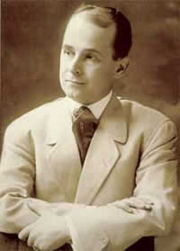
Winsor McCay
Winsor McCay was an American cartoonist and animator. Born September 26, 1869, in Spring Lake. Died July 26, 1934, in Brooklyn. Known for Little Nemo and Gertie the Dinosaur. Educated at Cleary University and Eastern Michigan University. Awards include Winsor McCay Award and Will Eisner Hall of Fame.
Facts
28 facts · 2 confirmed by two sources · 10 cited · 16 from one source
Where this comes from
Papalocal keeps its own record. It started from these sources; what each one said is kept here as it was copied, so a change on their side never changes this page by itself. Tap one to read its version.
What Wikidata says · copied November 13, 2026 · revision 2558285176
- Described as
- American cartoonist and animator
- Other names
- Silas, Winsor Z. McCay, Winsor MacCay, Winsor Zenic McCay, Zenas Winsor McCay, Winsor Zenas McCay, Winsor McKay
- Born
- September 26, 1869 · 5 references
- Died
- July 26, 1934 · 9 references
- Born in
- Spring Lake · 1 reference
- Died in
- Brooklyn · 2 references
- Buried in
- The Evergreens Cemetery
- Cause of death
- stroke · 1 reference
- Citizen of
- United States
- Occupation
- cartoonist; animator · 2 references; screenwriter; science fiction writer; film producer · 1 reference; comics artist · 3 references; animation director; film director
- Worked for
- The Cincinnati Times-Star · 1 reference; Cincinnati Commercial Tribune · 1 reference; New York Herald · 1 reference; Hearst Communications · 1 reference
- Education
- Cleary University; Eastern Michigan University
- Known for
- Little Nemo; Gertie the Dinosaur
- Awards
- Winsor McCay Award (1974); Will Eisner Hall of Fame (1996) · 1 reference
- Field
- comic; animation
- Children
- Bob McCay
- Wikipedias with a page
- 47
Wikidata item Q207960 (wikidata.org/wiki/Q207960), public domain (CC0). Copied November 13, 2026.
What Wikipedia says · copied November 13, 2026 · revision 1381237745
Zenas Winsor McCay (c. September 26, 1869 – July 26, 1934) was an American cartoonist and animator. He is best known for the comic strip Little Nemo (1905–1914; 1924–1927) and the animated film Gertie the Dinosaur (1914). For contractual reasons, he worked under the pen name Silas on the comic strip Dream of the Rarebit Fiend.
From a young age, McCay was a quick, prolific, and technically dextrous artist. He started his professional career making posters and performing for dime museums, and in 1898 began illustrating newspapers and magazines. In 1903 he joined the New York Herald, where he created popular comic strips such as Little Sammy Sneeze and Dream of the Rarebit Fiend. In 1905, his signature strip Little Nemo in Slumberland debuted—a fantasy strip in an Art Nouveau style about a young boy and his adventurous dreams. The strip demonstrated McCay's strong graphic sense and mastery of color and linear perspective. McCay experimented with the formal elements of the comic strip page, arranging and sizing panels to increase impact and enhance the narrative. McCay also produced numerous detailed editorial cartoons and was a popular performer of chalk talks on the vaudeville circuit.
McCay was an early animation pioneer; between 1911 and 1921, he self-financed and animated ten films, some of which survive only as fragments. The first three served in his vaudeville act; Gertie the Dinosaur was an interactive routine in which McCay appeared to give orders to a trained dinosaur. McCay and his assistants worked for twenty-two months on his most ambitious film, The Sinking of the Lusitania (1918), a patriotic recreation of the German torpedoing in 1915 of the RMS Lusitania. Lusitania did not enjoy as much commercial success as the earlier films, and McCay's later movies attracted little attention. His animation, vaudeville, and comic strip work was gradually curtailed as newspaper magnate William Randolph Hearst, his employer since 1911, expected McCay to devote his energies to editorial illustrations.
In his drawing, McCay made bold, prodigious use of linear perspective, particularly in detailed architecture and cityscapes. He textured his editorial cartoons with copious fine hatching, and made color a central element in Little Nemo. His comic strip work has influenced generations of cartoonists and illustrators. The technical level of McCay's animation—its naturalism, smoothness, and scale—was unmatched until the work of Fleischer Studios in the late 1920s, followed by Walt Disney's feature films in the 1930s. He pioneered inbetweening, the use of registration marks, cycling, and other animation techniques that were to become standard.
- Born, in its opening lines
- September 26, 1869
- Died, in its opening lines
- July 26, 1934
From the Wikipedia article “Winsor McCay” (en.wikipedia.org/wiki/Winsor_McCay), by its contributors, under CC BY-SA 4.0 (creativecommons.org/licenses/by-sa/4.0/). Copied November 13, 2026; not changed.
Confirmed Two sources agree. Cited One source, and it names where it got it. One source One source, without a reference of its own. Sources disagree The sources disagree. We show the best-supported value and keep theirs below.
