
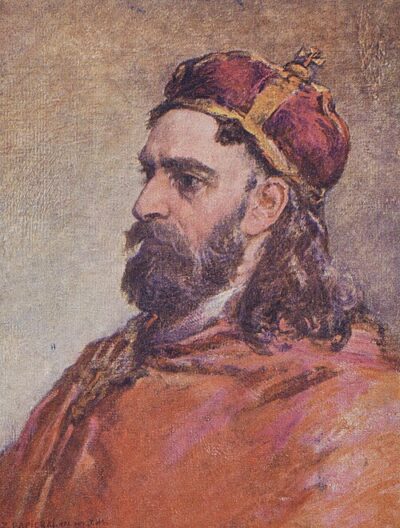
Władysław I Herman
Władysław I Herman was a Duke of Poland. Born 1043, in Poland. Died June 4, 1102, in Płock. Positions held include King of Poland.
Facts
22 facts · 1 confirmed by two sources · 4 cited · 16 from one source · 1 where the sources disagree
What’s different
- Born: we show 1043 (Sources disagree). Wikipedia says c. 1044
Where this comes from
Papalocal keeps its own record. It started from these sources; what each one said is kept here as it was copied, so a change on their side never changes this page by itself. Tap one to read its version.
What Wikidata says · copied November 16, 2026 · revision 2568891926
- Described as
- Duke of Poland (1043-1102)
- Other names
- Ladislaus I Herman
- Born
- 1043 · 1 reference
- Died
- June 4, 1102
- Born in
- Poland
- Died in
- Płock
- Buried in
- Płock Cathedral
- Citizen of
- Poland · 1 reference
- Occupation
- politician · 1 reference
- Positions held
- King of Poland · 1 reference
- Field
- politics · 1 reference; government · 1 reference
- Spouse
- Judith of Bohemia (1080–) · 1 reference; Judith of Swabia (1089–) · 1 reference
- Children
- Bolesław III Wrymouth; Agnes I, Abbess of Quedlinburg; Adelajda Piast; Zbigniew of Poland · 1 reference; unknown daughter of Władysław I Herman · 1 reference
- Father
- Casimir I the Restorer · 1 reference
- Mother
- Maria Dobroniega of Kiev · 1 reference
- Siblings
- Świętosława of Poland; Bolesław II the Generous; Mieszko Kazimierzowic
- Wikipedias with a page
- 37
Wikidata item Q54046 (wikidata.org/wiki/Q54046), public domain (CC0). Copied November 16, 2026.
What Wikipedia says · copied November 16, 2026 · revision 1378695486
Władysław I Herman (c. 1044 – 4 June 1102) was the Duke of Poland from 1079 until his death in 1102.
Władysław ruled during a period of political fragility following the turbulent reign of his brother, Bolesław II the Bold. He was a member of the Piast dynasty, and came to power after Bolesław II was deposed and exiled due to a conflict with the Roman Catholic Church that resulted in the martyrdom of Stanislaus, Bishop of Kraków. Władysław's accession marked a significant shift in governance, as his rule emphasized stability, compromise, and avoidance of open confrontation.
Unlike his predecessor, Władysław I Herman exercised relatively limited personal authority. Much of the effective power during his reign was held by magnates, most notably Sieciech as the count palatine, whose influence over state affairs became a defining feature of the period. Władysław pursued a cautious foreign policy, maintaining close ties with the Holy Roman Empire and the Kingdom of Bohemia, and refrained from expansionist ambitions. His reign is often characterized by decentralization, which reduced ducal control but helped prevent major external conflicts.
Władysław I Herman’s legacy is closely connected to the succession struggles between his sons, Zbigniew and Bolesław III Wrymouth. Toward the end of his reign, Poland was effectively divided between them, reflecting the weakening of central authority. Although frequently portrayed as a weak and passive ruler, his extensive church patronage and conciliatory policies played a significant role in stabilizing Poland and preserving dynastic continuity within the Piast state. Władysław I Herman died in 1102 and was buried in Płock Cathedral.
- Born, in its opening lines
- c. 1044
- Died, in its opening lines
- June 4, 1102
From the Wikipedia article “Władysław I Herman” (en.wikipedia.org/wiki/Władysław_I_Herman), by its contributors, under CC BY-SA 4.0 (creativecommons.org/licenses/by-sa/4.0/). Copied November 16, 2026; not changed.
Confirmed Two sources agree. Cited One source, and it names where it got it. One source One source, without a reference of its own. Sources disagree The sources disagree. We show the best-supported value and keep theirs below.
