
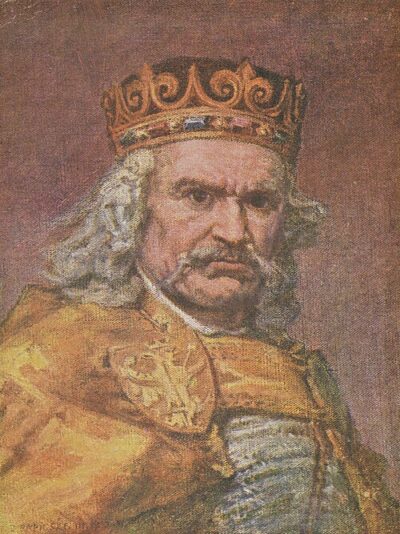
Władysław I the Elbow-high
Władysław I the Elbow-high was a King of Poland. Born 1260, in Kuyavia. Died March 2, 1333, in Kraków. Positions held include King of Poland (1320–1333).
Facts
25 facts · 0 confirmed by two sources · 5 cited · 20 from one source
Where this comes from
Papalocal keeps its own record. It started from these sources; what each one said is kept here as it was copied, so a change on their side never changes this page by itself. Tap one to read its version.
What Wikidata says · copied November 16, 2026 · revision 2568891933
- Described as
- King of Poland (1260-1333)
- Other names
- Ladislau I the Elbow-high, Ladislao I Lokieteck
- Born
- 1260 · 9 references
- Died
- March 2, 1333 · 2 references
- Born in
- Kuyavia
- Died in
- Kraków · 1 reference
- Buried in
- Wawel Cathedral
- Citizen of
- Kingdom of Poland · 2 references
- Occupation
- politician; monarch
- Positions held
- King of Poland (1320–1333)
- Field
- politics · 1 reference; government · 1 reference
- Spouse
- Hedwig of Kalisz (1293–) · 1 reference
- Children
- Kunigunde of Poland; Casimir III the Great; Elizabeth of Poland, Queen of Hungary
- Father
- Casimir I of Kuyavia · 1 reference
- Mother
- Euphrosyne of Opole
- Siblings
- Euphemia of Kuyavia; Casimir II of Łęczyca; Ziemomysł of Kuyavia; Siemowit, Duke of Kuyavia-Brieg; Leszek II the Black
- Religion
- Catholicism
- Nickname
- the Short; the Elbow-high
- Wikipedias with a page
- 50
Wikidata item Q54048 (wikidata.org/wiki/Q54048), public domain (CC0). Copied November 16, 2026.
What Wikipedia says · copied November 16, 2026 · revision 1360166605
Władysław I Łokietek, in English known as the "Elbow-high" or Ladislaus the Short (c. 1260/1261 – 2 March 1333), was King of Poland from 1320 to 1333, and duke of several of the provinces and principalities in the preceding years. He was a member of the royal Piast dynasty, the son of Duke Casimir I of Kuyavia, and great-grandson of High-Duke Casimir II the Just.
Władysław I inherited a small portion of his father's domain, but his dominion grew as some of his brothers died young. He unsuccessfully tried to incorporate the Duchy of Kraków (the Seniorate Province) in 1289, following the death of his half-brother Leszek II the Black and the withdrawal from contention of his ally Bolesław II of Masovia. After a period in exile during the rule of Wenceslaus II, Władysław regained several duchies and then Kraków in 1306 when Wenceslaus III of Bohemia was murdered. He temporarily took control of part of Greater Poland after the death of his ally Przemysł II, lost it, and then regained it.
Władysław was a skilled military leader, but also an administrator; he conquered Gdańsk Pomerania, and left it to familial governors. For the defense of this territory, he turned to the Teutonic Knights, who then demanded an exorbitant sum, or the land itself as an alternative. This led to an extended conflict with the Knights.
Perhaps his greatest achievement was gaining papal permission to be crowned king of Poland in 1320, which occurred for the first time at Wawel Cathedral in Kraków. Władysław died in 1333 and was succeeded by his son, Casimir III the Great.
From the Wikipedia article “Władysław I Łokietek” (en.wikipedia.org/wiki/Władysław_I_Łokietek), by its contributors, under CC BY-SA 4.0 (creativecommons.org/licenses/by-sa/4.0/). Copied November 16, 2026; not changed.
Confirmed Two sources agree. Cited One source, and it names where it got it. One source One source, without a reference of its own. Sources disagree The sources disagree. We show the best-supported value and keep theirs below.
