
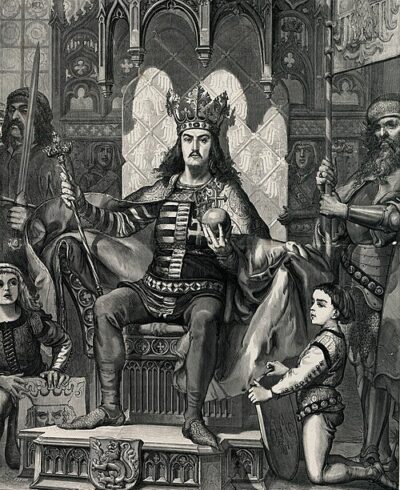
Władysław III of Poland
Władysław III of Poland was a king of Poland and Hungary. Born October 31, 1424, in Kraków. Died November 10, 1444, in Varna. Positions held include King of Poland (1434–1444) and Apostolic King of Hungary (1440–1444).
Facts
15 facts · 2 confirmed by two sources · 5 cited · 8 from one source
Where this comes from
Papalocal keeps its own record. It started from these sources; what each one said is kept here as it was copied, so a change on their side never changes this page by itself. Tap one to read its version.
What Wikidata says · copied November 16, 2026 · revision 2569841409
- Described as
- king of Poland and Hungary
- Other names
- Władysław III Jagiellon, Władysław III Warneńczyk, Ladislaus of Varna, Ladislao III Jagellón II
- Born
- October 31, 1424 · 2 references
- Died
- November 10, 1444 · 3 references
- Born in
- Kraków · 1 reference
- Died in
- Varna · 3 references
- Buried in
- Wawel Cathedral
- Cause of death
- combat · 1 reference
- Citizen of
- Grand Duchy of Lithuania · 1 reference
- Occupation
- monarch · 1 reference
- Positions held
- King of Poland (1434–1444) · 1 reference; Apostolic King of Hungary (1440–1444) · 1 reference
- Father
- Władysław II Jagiełło · 2 references
- Mother
- Sophia of Halshany · 1 reference
- Siblings
- Casimir IV Jagiellon; Elizabeth Bonifacia of Poland; Hedwig Jagiellon
- Wikipedias with a page
- 52
Wikidata item Q54053 (wikidata.org/wiki/Q54053), public domain (CC0). Copied November 16, 2026.
What Wikipedia says · copied November 16, 2026 · revision 1383960935
Władysław III of Poland (31 October 1424 – presumably 10 November 1444), also known as Ladislaus of Varna, was King of Poland and Supreme Duke of the Grand Duchy of Lithuania from 1434, as well as King of Hungary and Croatia as Vladislaus I from 1440 until his presumed death at the Battle of Varna. He was the eldest son of Władysław II Jagiełło (Jogaila) by his fourth wife, Lithuanian noblewoman Sophia of Halshany.
Władysław III succeeded his father shortly before turning ten in 1434 and was, therefore, deemed unfit to rule until coming of age. Cardinal Zbigniew Oleśnicki acted as regent and a temporary provisores council executed power in the king's name. However, Władysław III's legitimacy to the crown was contested by Lesser Polish nobles favouring the candidacy of Siemowit V of Masovia, who was of Piast lineage. In the aftermath of the coronation, Spytko III of Melsztyn accused Oleśnicki, the council and the Catholic Church of exploiting the king's youth to hold authority. A sympathiser with the Czech Hussites, Spytko was killed at the Battle of Grotniki in 1439, thus ending the hostilities.
Władysław III simultaneously faced the effects of the Polish–Teutonic War, which commenced under his father's reign in 1431. The Teutonic Knights began supporting Švitrigaila and the Livonian Order in a military struggle against Poland and Sigismund Kęstutaitis of Lithuania in 1434, shortly after Władysław III assumed the throne. Consequently, the king and the Polish Royal Council, the curia regis, renewed their war efforts by fortifying the borderland regions and sending an army to Lithuania, which was engulfed in a civil war since 1432. Švitrigaila, the Livonians and their allies were ultimately defeated at the Battle of Wiłkomierz, and Władysław forced the Peace of Brześć Kujawski on the Teutonic State in December 1435, which curtailed Teutonic influence in East-Central Europe.
The policy of the Kingdom of Poland under Władysław and Oleśnicki was to reclaim lost territories such as Silesia or Pomerania and expand its influence to neighbouring realms. In 1440, Władysław was elected King of Hungary and Croatia following the death of Albert II of Germany. Albert's widow, Elizabeth of Luxembourg, spurned the outcome and advocated for her infant son, Ladislaus the Posthumous, to rule under the guardianship of Frederick III Habsburg whilst purloining the Holy Crown of Hungary. Prolonged hostilities from the Habsburgs, the imminent Ottoman advance into Hungary and Elizabeth's sudden death solidified Władysław's legitimacy to the Hungarian throne. Ruling much of Southeastern and Central Europe, Władysław became compelled in confronting the Ottoman Empire.
With the Turkish grip over the Balkans weakened in the aftermath of the Hungarian–Ottoman War (1437–1442), the papacy and papal legate Julian Cesarini urged Władysław to launch the Crusade of Varna. After initial successes, the outnumbered Christian forces engaged in a decisive battle at Varna, where Władysław was reportedly killed in a heroic cavalry charge against Sultan Murad II. His body was never recovered and its disappearance led to numerous survival theories or legends, none of which have been confirmed. Władysław's legacy in Poland and Hungary is divisive, yet Władysław remains a notable figure in countries like Bulgaria, which were under Ottoman domination. He was succeeded in Poland by his younger brother Casimir IV, and in Hungary-Croatia by his rival Ladislaus V the Posthumous.
- Born, in its opening lines
- October 31, 1424
- Died, in its opening lines
- November 10, 1444
From the Wikipedia article “Władysław III of Poland” (en.wikipedia.org/wiki/Władysław_III_of_Poland), by its contributors, under CC BY-SA 4.0 (creativecommons.org/licenses/by-sa/4.0/). Copied November 16, 2026; not changed.
Confirmed Two sources agree. Cited One source, and it names where it got it. One source One source, without a reference of its own. Sources disagree The sources disagree. We show the best-supported value and keep theirs below.
