
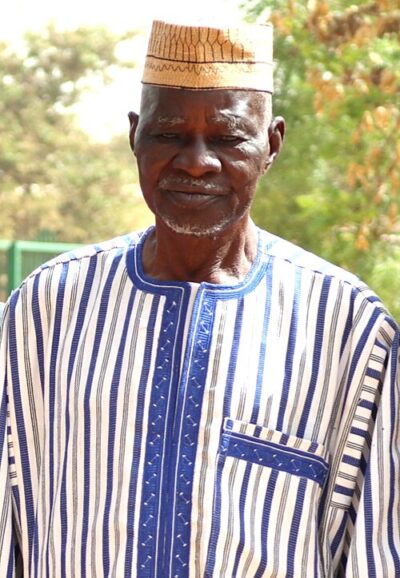
Yacouba Sawadogo was a Burkinabé farmer. Born January 1, 1946, in Ouahigouya. Died December 3, 2023, in Ouahigouya. Awards include Right Livelihood Award and Champions of the Earth.
Facts
8 facts · 2 confirmed by two sources · 5 cited · 1 from one source
Where this comes from
Papalocal keeps its own record. It started from these sources; what each one said is kept here as it was copied, so a change on their side never changes this page by itself. Tap one to read its version.
What Wikidata says · copied November 18, 2026 · revision 2570664198
- Described as
- Burkinabé farmer
- Born
- January 1, 1946 · 1 reference
- Died
- December 3, 2023 · 1 reference
- Born in
- Ouahigouya · 1 reference
- Died in
- Ouahigouya · 1 reference
- Citizen of
- Burkina Faso
- Occupation
- farmer · 1 reference
- Awards
- Right Livelihood Award (2018) · 1 reference; Champions of the Earth (2020) · 1 reference
- Wikipedias with a page
- 20
Wikidata item Q4401126 (wikidata.org/wiki/Q4401126), public domain (CC0). Copied November 18, 2026.
What Wikipedia says · copied November 18, 2026 · revision 1385422394
Yacouba Sawadogo (1946 – 3 December 2023) was a Burkinabé farmer and agronomist who successfully used a traditional farming technique called zaï to restore soils damaged by desertification and drought. Such techniques are known by the collective terms agroforestry and farmer-managed natural regeneration.
A 2010 documentary feature film, The Man Who Stopped the Desert, first screened in the UK, portrays his life.
Sawadogo was a native speaker of Mossi. In 2018, he was awarded the Right Livelihood Award. In 2020, he was awarded the Champions of the Earth award.
Sawadogo died on 3 December 2023 at age 77.
- Born, in its opening lines
- 1946
- Died, in its opening lines
- December 3, 2023
From the Wikipedia article “Yacouba Sawadogo” (en.wikipedia.org/wiki/Yacouba_Sawadogo), by its contributors, under CC BY-SA 4.0 (creativecommons.org/licenses/by-sa/4.0/). Copied November 18, 2026; not changed.
Confirmed Two sources agree. Cited One source, and it names where it got it. One source One source, without a reference of its own. Sources disagree The sources disagree. We show the best-supported value and keep theirs below.
