
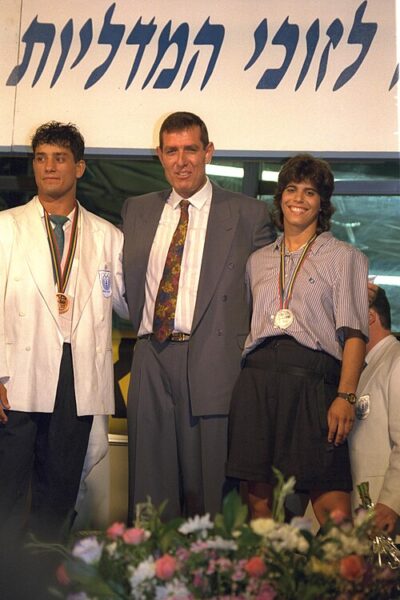
Yael Arad is an Israeli judoka. Born May 1, 1967, in Tel Aviv. Positions held include member of the International Olympic Committee (2023–).
Facts
10 facts · 1 confirmed by two sources · 4 cited · 5 from one source
Where this comes from
Papalocal keeps its own record. It started from these sources; what each one said is kept here as it was copied, so a change on their side never changes this page by itself. Tap one to read its version.
What Wikidata says · copied November 18, 2026 · revision 2567547326
- Described as
- Israeli judoka
- Born
- May 1, 1967
- Born in
- Tel Aviv · 1 reference
- Citizen of
- Israel
- Occupation
- judoka; businessperson; athlete · 1 reference
- Positions held
- member of the International Olympic Committee (2023–) · 1 reference
- Sport
- judo · 1 reference
- Lived in
- Israel · 1 reference
- Website
- http://www.yaelarad.co.il/
- Wikipedias with a page
- 21
Wikidata item Q289453 (wikidata.org/wiki/Q289453), public domain (CC0). Copied November 18, 2026.
What Wikipedia says · copied November 18, 2026 · revision 1363173625
Yael Arad (Hebrew: יעל ארד; born 1 May 1967) is an Israeli judoka. She was the first Israeli to win an Olympic medal at the 1992 Summer Olympics in Barcelona in 1992. She is widely recognized as one of Israel's most successful athletes and is credited with bringing judo into the athletic mainstream.
After her retirement, Arad developed a career as a businesswoman and CEO. She specializes in entrepreneurship, business development and marketing strategy. She manages the commercial rights of ViacomCBS in Israel. Arad advises companies in various sectors and lectures on excellence in sports, life and business.In 2023, Arad became a member of the International Olympic Committee (IOC).
- Born, in its opening lines
- May 1, 1967
From the Wikipedia article “Yael Arad” (en.wikipedia.org/wiki/Yael_Arad), by its contributors, under CC BY-SA 4.0 (creativecommons.org/licenses/by-sa/4.0/). Copied November 18, 2026; not changed.
Confirmed Two sources agree. Cited One source, and it names where it got it. One source One source, without a reference of its own. Sources disagree The sources disagree. We show the best-supported value and keep theirs below.
