
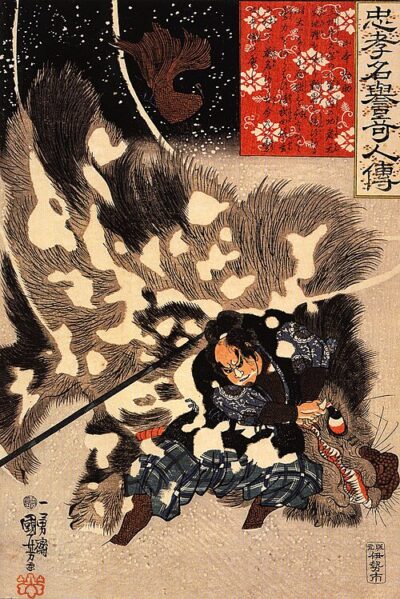
Yamamoto Kansuke
Yamamoto Kansuke was a Samurai of the Sengoku period. Born 1493, in Toyokawa. Died October 18, 1561, in Shinano Province.
Facts
7 facts · 1 confirmed by two sources · 0 cited · 5 from one source · 1 where the sources disagree
What’s different
- Born: we show 1493 (Sources disagree). Wikipedia says 1501
Where this comes from
Papalocal keeps its own record. It started from these sources; what each one said is kept here as it was copied, so a change on their side never changes this page by itself. Tap one to read its version.
What Wikidata says · copied November 18, 2026 · revision 2517873619
- Described as
- Samurai of the Sengoku period (1501–1561)
- Born
- 1493 · 1 reference
- Died
- October 18, 1561
- Born in
- Toyokawa
- Died in
- Shinano Province
- Citizen of
- Japan
- Occupation
- samurai
- Religion
- Buddhism
- Wikipedias with a page
- 21
Wikidata item Q468447 (wikidata.org/wiki/Q468447), public domain (CC0). Copied November 18, 2026.
What Wikipedia says · copied November 18, 2026 · revision 1380846469
Yamamoto Kansuke (山本 勘助; 1501 – October 18, 1561) was a Japanese samurai of the Sengoku period. He was known as one of the "Twenty-Four Generals of Takeda Shingen". Also known by his formal name, Haruyuki (晴幸). He was a brilliant strategist, and is particularly known for his plan which led to success in the fourth battle of Kawanakajima against Uesugi Kenshin. However, Kansuke never lived to see his plan succeed; thinking it to have failed, he charged headlong into the enemy ranks, dying in battle.
- Born, in its opening lines
- 1501
- Died, in its opening lines
- October 18, 1561
From the Wikipedia article “Yamamoto Kansuke (general)” (en.wikipedia.org/wiki/Yamamoto_Kansuke_(general)), by its contributors, under CC BY-SA 4.0 (creativecommons.org/licenses/by-sa/4.0/). Copied November 18, 2026; not changed.
Confirmed Two sources agree. Cited One source, and it names where it got it. One source One source, without a reference of its own. Sources disagree The sources disagree. We show the best-supported value and keep theirs below.
