
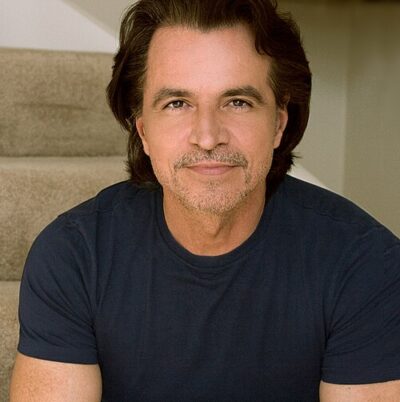
Yanni
Yanni is a Greek pianist, keyboardist, composer, and music producer. Born November 14, 1954, in Kalamata. Known for Love Songs. Educated at University of Minnesota.
Facts
24 facts · 1 confirmed by two sources · 4 cited · 19 from one source
Where this comes from
Papalocal keeps its own record. It started from these sources; what each one said is kept here as it was copied, so a change on their side never changes this page by itself. Tap one to read its version.
What Wikidata says · copied November 16, 2026 · revision 2570058300
- Described as
- Greek pianist, keyboardist, composer, and music producer
- Other names
- Giannis Chrysomallis, Γιάννης Χρυσομάλλης (Giánnis Chrysomállis)
- Born
- November 14, 1954 · 4 references
- Born in
- Kalamata · 1 reference
- Name at birth
- Yiannis Chryssomallis
- Citizen of
- Greece
- Occupation
- pianist; composer · 1 reference
- Education
- University of Minnesota
- Sport
- competitive swimming
- Genre
- instrumental music · 1 reference; new age music · 1 reference
- Instrument
- piano
- Record label
- Private Music; Windham Hill Records; Bertelsmann Music Group; Virgin Records; EMI; RLJE Films
- Known for
- Love Songs
- Field
- new age music · 1 reference; world music; instrumental music; crossover
- Children
- Krystal Ann
- Website
- http://yanni.com/
- Wikipedias with a page
- 50
Wikidata item Q234716 (wikidata.org/wiki/Q234716), public domain (CC0). Copied November 16, 2026.
What Wikipedia says · copied November 16, 2026 · revision 1381134784
Yiannis Chryssomallis (Greek: Γιάννης Χρυσομάλλης; born November 14, 1954), known professionally as Yanni ( YAH-nee), is a Greek composer, keyboardist, pianist, and music producer.
Yanni uses the musical shorthand that he developed as a child, blending jazz, classical, soft rock, and world music to create predominantly instrumental works. Although this genre of music was not well suited for commercial pop radio and music television, Yanni received international recognition by producing concerts at historic monuments and by producing videos that were broadcast on public television. His breakthrough concert, Live at the Acropolis, yielded the second best-selling music concert video of all time. Additional historic sites for Yanni's concerts have included India's Taj Mahal, China's Forbidden City, the United Arab Emirates' Burj Khalifa, Russia's Kremlin, Puerto Rico's El Morro castle, Lebanon's ancient city of Byblos, Tunisia's Roman Theatre of Carthage, India's Laxmi Vilas Palace, the Egyptian pyramids and Great Sphinx of Giza, and the Amman Citadel.
At least sixteen of Yanni's albums have peaked at No. 1 in Billboard's "Top New Age Album" category, and two albums (Dare to Dream and In My Time) received Grammy Award nominations. Yanni has performed in more than 30 countries on five continents, and through late 2015 had performed live in concert before more than 5 million people and had accumulated more than 40 platinum and gold albums globally, with sales totaling more than 25 million copies. A longtime fundraiser for public television, Yanni's compositions have been used on commercial television programs, especially for sporting events. He has written film scores and the music for an award-winning British Airways television commercial.
Yanni popularized the combination of electronic music synthesizers with a full symphony orchestra. He has employed musicians of various nationalities and has incorporated a variety of exotic instruments to create music that has been called an eclectic fusion of ethnic sounds. Influenced by his encounters with cultures around the world, Yanni has been called a "true global artist" and his music is said to reflect his "one world, one people" philosophy.
- Born, in its opening lines
- November 14, 1954
From the Wikipedia article “Yanni” (en.wikipedia.org/wiki/Yanni), by its contributors, under CC BY-SA 4.0 (creativecommons.org/licenses/by-sa/4.0/). Copied November 16, 2026; not changed.
Confirmed Two sources agree. Cited One source, and it names where it got it. One source One source, without a reference of its own. Sources disagree The sources disagree. We show the best-supported value and keep theirs below.
