
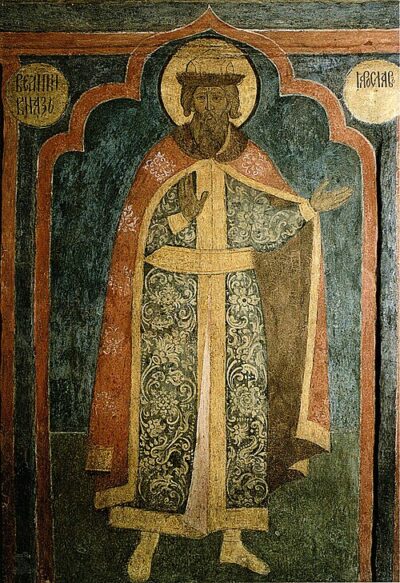
Yaroslav of Tver
Yaroslav of Tver was a Grand Prince of Vladimir. Born 1230. Died September 16, 1272.
Facts
14 facts · 1 confirmed by two sources · 1 cited · 11 from one source · 1 where the sources disagree
What’s different
- Died: we show September 16, 1272 (Sources disagree). Wikipedia says September 9, 1271
Where this comes from
Papalocal keeps its own record. It started from these sources; what each one said is kept here as it was copied, so a change on their side never changes this page by itself. Tap one to read its version.
What Wikidata says · copied November 16, 2026 · revision 2523959265
- Described as
- Grand Prince of Vladimir (1230-1272)
- Other names
- Yaroslav III Yaroslavich
- Born
- 1230
- Died
- September 16, 1272
- Citizen of
- Grand Principality of Vladimir · 1 reference
- Occupation
- politician
- Spouse
- Xenia of Tarusa (1263–) · 1 reference; NN
- Children
- Mikhail of Tver; Svyatoslav, Grand Duke of Tver
- Father
- Yaroslav II of Vladimir
- Mother
- Feodossiya Mstislavna · 1 reference
- Siblings
- Alexander Nevsky; Andrey II of Vladimir; Vasily of Kostroma; Mikhail Khorobrit
- Wikipedias with a page
- 30
Wikidata item Q547839 (wikidata.org/wiki/Q547839), public domain (CC0). Copied November 16, 2026.
What Wikipedia says · copied November 16, 2026 · revision 1343374518
Yaroslav III Yaroslavich (Russian: Ярослав Ярославич; 1230 – 9 September 1271) was the first Prince of Tver from 1247, and Grand Prince of Vladimir from 1263 until his death in 1271. All the later princes of Tver descended from him.
Yaroslav and his son Mikhail presided over Tver's transformation into one of the greatest centres of power in medieval Russia which would compete with Moscow.
- Born, in its opening lines
- 1230
- Died, in its opening lines
- September 9, 1271
From the Wikipedia article “Yaroslav of Tver” (en.wikipedia.org/wiki/Yaroslav_of_Tver), by its contributors, under CC BY-SA 4.0 (creativecommons.org/licenses/by-sa/4.0/). Copied November 16, 2026; not changed.
Confirmed Two sources agree. Cited One source, and it names where it got it. One source One source, without a reference of its own. Sources disagree The sources disagree. We show the best-supported value and keep theirs below.
