
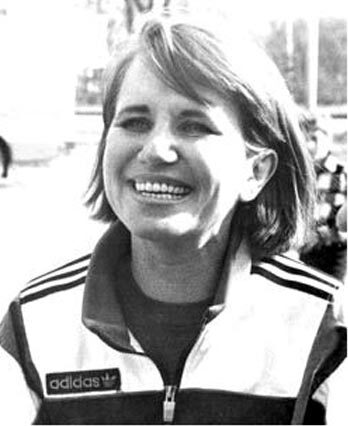
Yelena Romanova
Yelena Romanova was an athletics competitor. Born March 20, 1963, in Verkhnekumsky. Died January 28, 2007, in Volgograd. Educated at Volgograd State Academy of Physical Culture. Awards include Honoured Master of Sports of the USSR.
Facts
12 facts · 2 confirmed by two sources · 0 cited · 10 from one source
Where this comes from
Papalocal keeps its own record. It started from these sources; what each one said is kept here as it was copied, so a change on their side never changes this page by itself. Tap one to read its version.
What Wikidata says · copied November 18, 2026 · revision 2541749793
- Described as
- athletics competitor (1963-2007)
- Other names
- Yelena Nikolaevna Romanova
- Born
- March 20, 1963 · 2 references
- Died
- January 28, 2007
- Born in
- Verkhnekumsky
- Died in
- Volgograd
- Citizen of
- Russia; Soviet Union
- Occupation
- long-distance runner; athletics competitor
- Education
- Volgograd State Academy of Physical Culture
- Sport
- athletics
- Awards
- Honoured Master of Sports of the USSR
- Height
- 1.63 m (5 ft 4 in)
- Wikipedias with a page
- 22
Wikidata item Q236563 (wikidata.org/wiki/Q236563), public domain (CC0). Copied November 18, 2026.
What Wikipedia says · copied November 18, 2026 · revision 1364563453
Yelena Nikolaevna Romanova (Russian: Елена Николаевна Романова; born Yelena Malikhina, 20 March 1963 – 28 January 2007) was a Russian distance runner. She won an Olympic gold medal in women's 3000 metres in 1992.
She was found dead of unknown causes at age 43 in her flat in Volgograd. At the time of her death she was employed as athletics coach at a local sports school and also worked with members of the Russian athletic team.
- Born, in its opening lines
- March 20, 1963
- Died, in its opening lines
- January 28, 2007
From the Wikipedia article “Yelena Romanova” (en.wikipedia.org/wiki/Yelena_Romanova), by its contributors, under CC BY-SA 4.0 (creativecommons.org/licenses/by-sa/4.0/). Copied November 18, 2026; not changed.
Confirmed Two sources agree. Cited One source, and it names where it got it. One source One source, without a reference of its own. Sources disagree The sources disagree. We show the best-supported value and keep theirs below.
