
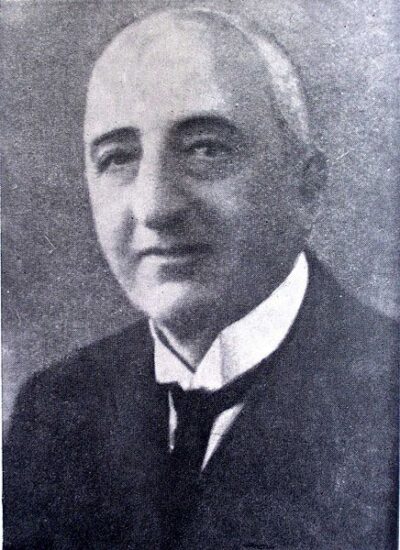
Yervant Odian
Yervant Odian was an Armenian writer. Born September 19, 1869, in Constantinople. Died October 3, 1926, in Cairo. Educated at Berberian School.
Facts
24 facts · 0 confirmed by two sources · 12 cited · 12 from one source
Where this comes from
Papalocal keeps its own record. It started from these sources; what each one said is kept here as it was copied, so a change on their side never changes this page by itself. Tap one to read its version.
What Wikidata says · copied November 18, 2026 · revision 2559757803
- Described as
- Armenian writer (1869-1926)
- Other names
- Ervand Otyan, Ervand Khachiki Otyan
- Born
- September 19, 1869 · 1 reference
- Died
- October 3, 1926 · 1 reference
- Born in
- Constantinople
- Died in
- Cairo · 1 reference
- Buried in
- Monastery of Saint Mina
- Cause of death
- cancer
- Citizen of
- Ottoman Empire
- Occupation
- linguist; translator; novelist; editing staff; journalist · 1 reference; writer · 1 reference
- Worked for
- Hayrenik (1892–); Hairenik; Azad khosk (1901–1908) · 1 reference; Azat bem (1903–1906) · 1 reference
- Education
- Berberian School (1882–) · 1 reference
- Genre
- satire · 1 reference
- Lived in
- Constantinople (1908–); Deir ez-Zor (1915–); Bucharest (1922–) · 1 reference; Tripoli (1924–) · 1 reference; Cairo (1925–) · 1 reference
- Wikipedias with a page
- 21
Wikidata item Q1054731 (wikidata.org/wiki/Q1054731), public domain (CC0). Copied November 18, 2026.
What Wikipedia says · copied November 18, 2026 · revision 1368438029
Yervant Odian (Armenian: Երուանդ Օտեան or Երվանդ Օտյան; 19 September 1869 – 1926) was an Ottoman Armenian satirist, journalist and playwright. He is regarded as one of the most influential Armenian satirists, along with his contemporary Hagop Baronian. He is best known for his work Comrade Panchooni ("Panchooni" being a pun on the Armenian words for "has nothing"), a satire mocking the Armenian revolutionary parties (such as Dashnaks and Hunchaks) of the time.
Born into a wealthy family in Istanbul, Odian left the city during the Hamidian massacres of 1894–1896 and traveled throughout Europe before returning to Istanbul in 1909. Odian was deported to the Syrian desert during the Armenian genocide and survived; he published his memoirs about his experiences during the genocide in 1919.
Odian's writings, which include novels and short stories, often humorously point out humanity's vices. Odian's works also dealt with Armenian-Turkish relations and Muslim-Christian relations. In a 2013 piece written by Eddie Arnavoudian, he proclaimed "Even if elsewhere equaled in modern Armenian literature, Odian's exposure of the establishment's putrid core has certainly not been bettered". Odian's writing styles are often described as extroverted, as if his is removing his persona from the piece in order to best portray the truth.
From the Wikipedia article “Yervant Odian” (en.wikipedia.org/wiki/Yervant_Odian), by its contributors, under CC BY-SA 4.0 (creativecommons.org/licenses/by-sa/4.0/). Copied November 18, 2026; not changed.
Confirmed Two sources agree. Cited One source, and it names where it got it. One source One source, without a reference of its own. Sources disagree The sources disagree. We show the best-supported value and keep theirs below.
