
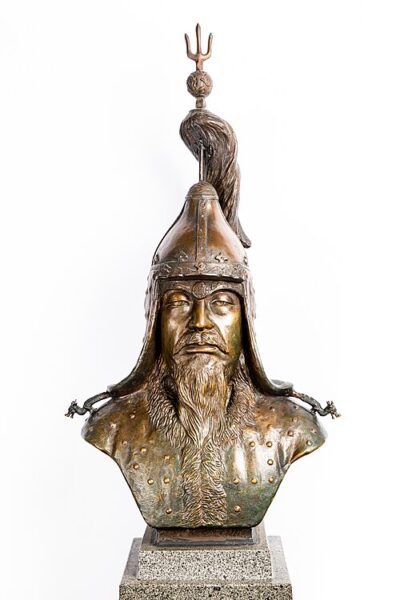
Yi Sun-sin
Yi Sun-sin was a Korean (Joseon) naval commander. Born April 28, 1545, in Hanseongbu. Died December 16, 1598, in Namhae County.
Facts
9 facts · 2 confirmed by two sources · 1 cited · 6 from one source
Where this comes from
Papalocal keeps its own record. It started from these sources; what each one said is kept here as it was copied, so a change on their side never changes this page by itself. Tap one to read its version.
What Wikidata says · copied November 16, 2026 · revision 2566172188
- Described as
- Korean (Joseon) naval commander (1545 – 1598)
- Other names
- Yi Sun-shin, Admiral Yi Sun-sin, Yi Sunsin
- Born
- April 28, 1545 · 1 reference
- Died
- December 16, 1598
- Born in
- Hanseongbu
- Died in
- Namhae County
- Buried in
- Asan
- Citizen of
- Joseon
- Occupation
- naval officer; soldier · 1 reference
- Military rank
- admiral
- Wikipedias with a page
- 56
Wikidata item Q50184 (wikidata.org/wiki/Q50184), public domain (CC0). Copied November 16, 2026.
What Wikipedia says · copied November 16, 2026 · revision 1379811546
Yi Sun-sin (Korean: 이순신; Hanja: 李舜臣; Korean pronunciation: [i.sʰun.ɕin]; April 28, 1545 – December 16, 1598) was a Korean admiral and military general known for his victories against the Japanese navy during the Imjin War in the Joseon period. Yi's courtesy name was Yŏhae (여해), and he was posthumously honored with the title Lord of Loyal Valor (충무공; 忠武公).
The exact number of naval engagements conducted by Admiral Yi against the Japanese is a subject of historical debate. However, it is generally accepted that he fought in at least 23 naval battles, achieving victory in all. In many of these engagements, he commanded forces that were outnumbered and poorly supplied. His most dramatic success occurred in the Battle of Myeongnyang, where he led a Korean fleet of 13 ships to victory against a Japanese fleet of at least 133. Yi died from a gunshot wound in the Battle of Noryang, the last major battle of the Imjin War, on December 16, 1598.
Yi is considered one of history's greatest naval commanders, known for his strategic vision, intelligence, innovations, and personality (see military evaluation). He is a prominent figure in Korean history, with landmarks, awards, and towns named after him, as well as numerous films and documentaries about his achievements. His wartime journals, known as the Nanjung Ilgi, are part of UNESCO's Memory of the World initiative.
- Born, in its opening lines
- April 28, 1545
- Died, in its opening lines
- December 16, 1598
From the Wikipedia article “Yi Sun-sin” (en.wikipedia.org/wiki/Yi_Sun-sin), by its contributors, under CC BY-SA 4.0 (creativecommons.org/licenses/by-sa/4.0/). Copied November 16, 2026; not changed.
Confirmed Two sources agree. Cited One source, and it names where it got it. One source One source, without a reference of its own. Sources disagree The sources disagree. We show the best-supported value and keep theirs below.
