
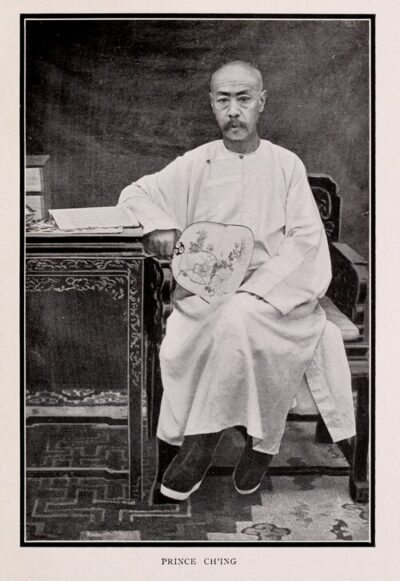
Yikuang, Prince Qing
Yikuang, Prince Qing was a Qing Dynasty noble and politician. Born November 16, 1838, in Beijing. Died January 28, 1917, in Beijing. Positions held include Prime Minister of the Imperial Cabinet (1911–) and Junji dachen (1903–).
Facts
17 facts · 1 confirmed by two sources · 1 cited · 14 from one source · 1 where the sources disagree
What’s different
- Born: we show November 16, 1838 (Sources disagree). Wikipedia says March 24, 1838
Where this comes from
Papalocal keeps its own record. It started from these sources; what each one said is kept here as it was copied, so a change on their side never changes this page by itself. Tap one to read its version.
What Wikidata says · copied November 18, 2026 · revision 2544897650
- Described as
- Qing Dynasty noble and politician (1838-1917)
- Other names
- Futing, Mi, Aixinjueluo Yikuang
- Born
- November 16, 1838
- Died
- January 28, 1917
- Born in
- Beijing
- Died in
- Beijing
- Citizen of
- Qing dynasty; Republic of China · 1 reference
- Occupation
- calligrapher; painter; politician
- Positions held
- Prime Minister of the Imperial Cabinet (1911–); Junji dachen (1903–)
- Children
- Zaizhen; Madam Xijiu; Tái Luân; Zaifu
- Father
- Mianxing · 1 reference
- Military rank
- army general
- Wikipedias with a page
- 21
Wikidata item Q1204208 (wikidata.org/wiki/Q1204208), public domain (CC0). Copied November 18, 2026.
What Wikipedia says · copied November 18, 2026 · revision 1378989615
Yikuang (Manchu: ᡳ ᡴᡠᠸᠠᠩ I-kuwang; 24 March 1838 – 28 January 1917), formally known as Prince Qing (or Prince Ch'ing), was a Manchu noble and politician of the Qing dynasty. He served as the first Prime Minister of the Imperial Cabinet, an office created in May 1911 to replace the Grand Council.
- Born, in its opening lines
- March 24, 1838
- Died, in its opening lines
- January 28, 1917
From the Wikipedia article “Yikuang” (en.wikipedia.org/wiki/Yikuang), by its contributors, under CC BY-SA 4.0 (creativecommons.org/licenses/by-sa/4.0/). Copied November 18, 2026; not changed.
Confirmed Two sources agree. Cited One source, and it names where it got it. One source One source, without a reference of its own. Sources disagree The sources disagree. We show the best-supported value and keep theirs below.
