
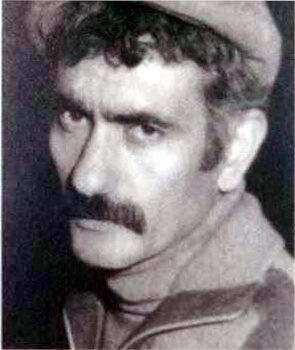
Yılmaz Güney
Yılmaz Güney was a Turkish film director, scenarist, novelist and actor. Born April 1, 1937, in Adana. Died September 9, 1984, in Paris. Known for Yol. Awards include Palme d'Or, Orhan Kemal Novel Prize and International Adana Film Festival Awards.
Facts
23 facts · 2 confirmed by two sources · 9 cited · 11 from one source · 1 where the sources disagree
What’s different
- Buried in: we show Père Lachaise Cemetery (Sources disagree). Wikidata also lists Grave of Güney
Where this comes from
Papalocal keeps its own record. It started from these sources; what each one said is kept here as it was copied, so a change on their side never changes this page by itself. Tap one to read its version.
What Wikidata says · copied November 16, 2026 · revision 2569174988
- Described as
- Turkish film director, scenarist, novelist and actor (1937-1984)
- Other names
- Yılmaz Pütün
- Born
- April 1, 1937 · 10 references
- Died
- September 9, 1984 · 9 references
- Born in
- Adana · 1 reference
- Died in
- Paris · 2 references
- Buried in
- Père Lachaise Cemetery; Grave of Güney
- Cause of death
- stomach cancer · 1 reference
- Name at birth
- Yılmaz Pütün · 1 reference
- Citizen of
- Turkey (–1983) · 2 references; statelessness (1983–)
- Occupation
- film director · 1 reference; actor · 1 reference; screenwriter; film editor; poet; writer · 1 reference
- Sport
- association football
- Known for
- Yol
- Awards
- Palme d'Or (1982); Orhan Kemal Novel Prize (1972); International Adana Film Festival Awards (1971); Golden Orange Award Best actor (1967); Golden Orange for Best Screenplay (1975)
- Spouse
- Nebahat Çehre (1967–1968) · 1 reference
- Wikipedias with a page
- 40
Wikidata item Q126693 (wikidata.org/wiki/Q126693), public domain (CC0). Copied November 16, 2026.
What Wikipedia says · copied November 16, 2026 · revision 1383409163
Yılmaz Güney (né Pütün; 1 April 1937 – 9 September 1984) was a Kurdish film director, screenwriter, novelist, actor and communist political activist. He quickly rose to prominence in the Turkish film industry. Many of his works were made from a far-left perspective and devoted to the plight of working-class people in Turkey. Güney won the Palme d'Or at the Cannes Film Festival in 1982 for the film Yol (The Road) which he co-directed with Şerif Gören. He was at constant odds with the Turkish government over the portrayal of Kurdish culture, people and language.
After being convicted of killing judge Sefa Mutlu in 1974 (a charge which he denied), Güney fled the country and was later stripped of his citizenship. A year before his death in 1983, he co-founded the Kurdish Institute of Paris together with the Kurdish poets Cegerxwîn and Hejar among others.
- Born, in its opening lines
- April 1, 1937
- Died, in its opening lines
- September 9, 1984
From the Wikipedia article “Yılmaz Güney” (en.wikipedia.org/wiki/Yılmaz_Güney), by its contributors, under CC BY-SA 4.0 (creativecommons.org/licenses/by-sa/4.0/). Copied November 16, 2026; not changed.
Confirmed Two sources agree. Cited One source, and it names where it got it. One source One source, without a reference of its own. Sources disagree The sources disagree. We show the best-supported value and keep theirs below.
