
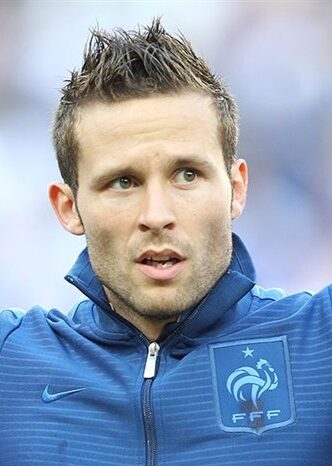
Yohan Cabaye
Yohan Cabaye is a French footballer. Born January 14, 1986, in Tourcoing. Teams include Newcastle United F.C. (2011–2014), Lille OSC (2004–2011) and Paris Saint-Germain FC (2014–2015).
Facts
20 facts · 1 confirmed by two sources · 1 cited · 18 from one source
Where this comes from
Papalocal keeps its own record. It started from these sources; what each one said is kept here as it was copied, so a change on their side never changes this page by itself. Tap one to read its version.
What Wikidata says · copied November 16, 2026 · revision 2568842400
- Described as
- French footballer (born 1986)
- Born
- January 14, 1986 · 3 references
- Born in
- Tourcoing
- Citizen of
- France
- Occupation
- association football player (–2020) · 1 reference
- Teams
- Newcastle United F.C. (2011–2014); Lille OSC (2004–2011); Paris Saint-Germain FC (2014–2015); Crystal Palace F.C. (2015–2018); France national under-21 association football team (2006–2008); France national under-19 association football team (2004–2005); France national under-20 association football team (2006); France national under-18 association football team (2004–2005); France national under-16 association football team; France men's national association football team (2010–2016); France national under-17 association football team (2003–2004); Alshariqa (2018–2019); AS Saint-Étienne (2019–2020)
- Sport
- association football
- Height
- 1.74 m (5 ft 9 in)
- Website
- http://www.yohan-cabaye.com
- Wikipedias with a page
- 51
Wikidata item Q1910 (wikidata.org/wiki/Q1910), public domain (CC0). Copied November 16, 2026.
What Wikipedia says · copied November 16, 2026 · revision 1385288144
Yohan Cabaye (French pronunciation: [jɔ.an ka.baj]; born 14 January 1986) is a French former professional footballer who played as a midfielder.
Cabaye began his football career playing for hometown club US Tourcoing at the age of six. After seven years developing in the club's youth academy, he joined professional club Lille. Cabaye spent six years in the club's youth academy before making his professional debut in the 2004–05 season helping Lille win the 2004 UEFA Intertoto Cup. He became a regular starter in the following season and participated in the UEFA Champions League for the first time under Claude Puel. Under manager Rudi Garcia, Cabaye developed into a playmaker and had his best season to date in the 2009–10 season scoring over 15 goals from the midfield position. In the 2010–11 season, he was a part of the Lille team that won the league and cup double.
In June 2011 following the end of the season, Cabaye joined English club Newcastle United on a five-year deal. On 29 January 2014, Newcastle accepted a £19 million offer for Cabaye from Ligue 1 champions Paris Saint-Germain. Cabaye joined, signing a three-year contract with the club. On 10 July 2015, he joined Crystal Palace. After signing for Dubai club Al-Nasr and later returning to France to play for Saint-Étienne, Cabaye announced his retirement in February 2021.
Cabaye was a former French youth international, having represented his nation at under-16, under-18, under-19, under-20, and under-21 level. At under-19 level, he played on the team that won the 2005 UEFA European Under-19 Championship. With the under-20 team, Cabaye played at the 2006 edition of the Toulon Tournament. At under-21 level, he served as captain of the team for a portion of his stint. In August 2010, Cabaye was called up to the senior team for the first time under new manager Laurent Blanc, and made his international debut on 11 August in a 2–1 friendly defeat against Norway. He went on to earn 48 caps and represented France at two UEFA European Championships (2012, 2016) and the 2014 FIFA World Cup.
- Born, in its opening lines
- January 14, 1986
From the Wikipedia article “Yohan Cabaye” (en.wikipedia.org/wiki/Yohan_Cabaye), by its contributors, under CC BY-SA 4.0 (creativecommons.org/licenses/by-sa/4.0/). Copied November 16, 2026; not changed.
Confirmed Two sources agree. Cited One source, and it names where it got it. One source One source, without a reference of its own. Sources disagree The sources disagree. We show the best-supported value and keep theirs below.
