
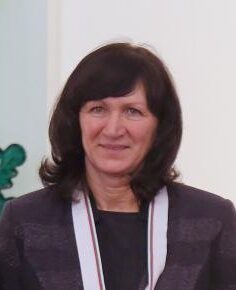
Yordanka Donkova
Yordanka Donkova is a Bulgarian athletics competitor. Born September 28, 1961, in Gorni Bogrov.
Facts
7 facts · 1 confirmed by two sources · 1 cited · 5 from one source
Where this comes from
Papalocal keeps its own record. It started from these sources; what each one said is kept here as it was copied, so a change on their side never changes this page by itself. Tap one to read its version.
What Wikidata says · copied November 16, 2026 · revision 2558018508
- Described as
- Bulgarian athletics competitor (born 1961)
- Other names
- Yordanka Lyubchova Donkova
- Born
- September 28, 1961 · 2 references
- Born in
- Gorni Bogrov · 1 reference
- Citizen of
- Bulgaria
- Occupation
- athletics competitor
- Sport
- athletics
- Children
- Zhivko Atanasov
- Height
- 1.75 m (5 ft 9 in)
- Wikipedias with a page
- 31
Wikidata item Q233410 (wikidata.org/wiki/Q233410), public domain (CC0). Copied November 16, 2026.
What Wikipedia says · copied November 16, 2026 · revision 1364564740
Yordanka Lyubchova Donkova (Bulgarian: Йорданка Любчова Донкова; born 28 September 1961) is a Bulgarian former hurdling athlete, notable for winning an Olympic gold medal and bronze medal as well as nine medals at European indoor and outdoor championships. Donkova set four 100 m hurdles world records in 1986. Her fifth world record, a time of 12.21 set in 1988, stood for almost 28 years until broken in 2016 by Kendra Harrison.
In total, Donkova has 16 medals from major athletics tournaments. She was named the Bulgarian Sportsperson of the Year in 1986. She was also named the BTA Best Balkan Athlete of the Year in 1986.
- Born, in its opening lines
- September 28, 1961
From the Wikipedia article “Yordanka Donkova” (en.wikipedia.org/wiki/Yordanka_Donkova), by its contributors, under CC BY-SA 4.0 (creativecommons.org/licenses/by-sa/4.0/). Copied November 16, 2026; not changed.
Confirmed Two sources agree. Cited One source, and it names where it got it. One source One source, without a reference of its own. Sources disagree The sources disagree. We show the best-supported value and keep theirs below.
