
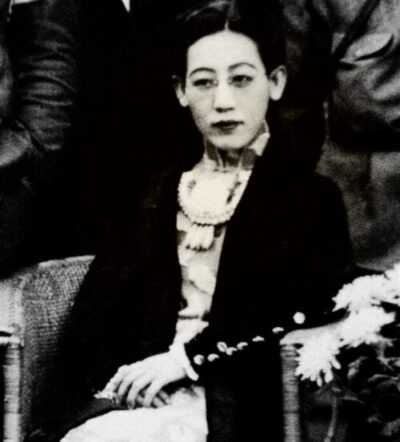
Yoshiko Kawashima
Yoshiko Kawashima was a Japanese spy in China. Born May 24, 1907, in Beijing. Died March 25, 1948, in Beijing.
Facts
14 facts · 2 confirmed by two sources · 1 cited · 11 from one source
Where this comes from
Papalocal keeps its own record. It started from these sources; what each one said is kept here as it was copied, so a change on their side never changes this page by itself. Tap one to read its version.
What Wikidata says · copied November 17, 2026 · revision 2567383381
- Described as
- Japanese spy in China (1907-1948)
- Other names
- Jin Bihui, Eastern Mata Hari
- Born
- May 24, 1907
- Died
- March 25, 1948
- Born in
- Beijing
- Died in
- Beijing
- Buried in
- Nagano Prefecture
- Cause of death
- execution by shooting
- Name at birth
- 愛新覺羅•顯玗
- Citizen of
- Republic of China
- Occupation
- spy · 1 reference
- Spouse
- Takashi Kawashima
- Father
- Shanqi
- Siblings
- Jin Bidong; Jin Moyu
- Military branch
- Imperial Japanese Army
- Wikipedias with a page
- 28
Wikidata item Q233531 (wikidata.org/wiki/Q233531), public domain (CC0). Copied November 17, 2026.
What Wikipedia says · copied November 17, 2026 · revision 1386089570
Yoshiko Kawashima (川島 芳子, Kawashima Yoshiko; 24 May 1907 – 25 March 1948), born Aisin Gioro Xianyu (愛新覺羅 · 顯㺭), was a Qing dynasty royal, part of the Aisin Gioro clan. Kawashima was raised in Japan and served as a spy for the Japanese Kwantung Army and Manchukuo during the Second Sino-Japanese War, and is sometimes known in fiction under the pseudonym "Eastern Mata Hari". After the war, Kawashima was captured, sentenced, and executed as a traitor by the Nationalist government of the Republic of China. Kawashima is also a notable descendant of Hooge, eldest son of Hong Taiji.
- Born, in its opening lines
- May 24, 1907
- Died, in its opening lines
- March 25, 1948
From the Wikipedia article “Yoshiko Kawashima” (en.wikipedia.org/wiki/Yoshiko_Kawashima), by its contributors, under CC BY-SA 4.0 (creativecommons.org/licenses/by-sa/4.0/). Copied November 17, 2026; not changed.
Confirmed Two sources agree. Cited One source, and it names where it got it. One source One source, without a reference of its own. Sources disagree The sources disagree. We show the best-supported value and keep theirs below.
